On January 13, the day the Chennai dance and music festival ends, another season of dance begins — this time in Mumbai. The National Centre for Performing Arts (NCPA), which completes 50 years as the city’s cultural hub, will unveil its first edition of the month-long NCPA Mumbai Dance Season, which it hopes will give a boost to dance audienceship — and contribute to putting India’s financial nerve centre on the annual cultural map.
The season kicks off at the Sunken Garden at NCPA with an event that showcases seven folk forms of India. Thereon, performances, lecture demonstrations, workshops and discussions on Indian classical and folk dances will be held across Mumbai — at Nariman Point, Goregaon, Bandra, Andheri, Worli, Chembur, Matunga, Juhu, Kandivli, and so on. Besides venues such as NCPA, the Nehru Centre, the Sangeet Mahabharati and the P L Deshpande Auditorium, the Godrej IT park, schools, old age homes and dance classrooms will host events.
NCPA has come up with a unique format that will see artistes promoting artistes. “Usually, dance gharanas and schools do not encourage students to see performances of other gharanas for fear that doing so might influence the student and dilute the purity of the gharana,” explains Swapnokalpa Dasgupta, NCPA’s head of programming (dance). “But the reality is that the more you watch, the more you learn and the more you get inspired.” So, besides showcasing dances, collaborating and innovating, the idea is to instil a community feeling among artistes.
Not every performance, talk or workshop will be open to general audiences. Some platforms will be for artistes to share their experiences, learn from one another, better their art or discuss matters that might not be openly spoken about — such as the #MeToo movement in dance. On February 14, a panel of performers, academics and activists will discuss the culture of misogyny and exploitation in classical Indian dance. “These things are talked about in hushed tones, but there needs to be an open discussion, for the younger lot to know how to say ‘no’ and the older ones to understand what forms sexual exploitation,” says Dasgupta.
There will be a workshop on lighting by designers Sushant Jadhav, Pathikrit Mukherjee and Nivedita Mukherjee. Lighting — its colour schemes, angles, types of light and its focus on dancer — are important parts of choreography which a dancer must understand, says Dasgupta. “For example, just by showing half the stage in blue light and the other half in red you can depict Ardhnarishwar (the composite androgynous form of Shiva and Parvati).”
There will also be a demonstration on dance makeup for stage and screen, followed by one on expression through mime, by Padmashree Niranjan Goswami, director of Indian Mime Theatre, Kolkata.
The evening of January 27 will feature “Shakthi”, a production that will place the delicate Mohiniattam alongside the muscular movements of Kalaripayattu to depict the dormant power of femininity.
Several recognised dance festivals will come under the season’s ambit this year. Among them are the Pt Durgalal Dance Festival by Kathak maestro Uma Dogra’s Samved, Namamee and Prayag by Shubhada Varadkar’s Sanskrita Foundation, Andaaz-e-Bayaan by Kathak exponent Renu Sharma’s Alpika, Vandemataram by Shila Mehta’s Nupur Zankar and India International Dance Festival by Aratrika as well as NCPA’s folk dance festival, Lokgatha.
Along with celebrating the many forms of dance, the season hopes to address some practical issues as well — or at least start a conversation around them. One such is about the financial viability of dance as a profession, which will be the subject of a panel discussion that will explore various revenue models, case studies and opportunities prevalent in the field of performing arts.
There will also be a Facebook Live event on dance and fitness, complete with a fitness instructor. The idea, says Dasgupta, is to take dance out of the confines of auditoriums and to the people — in whichever way possible.
The NCPA Mumbai Dance Season will be on from January 13 to February 17. To know more, visit www.ncpamumbai.com. Tickets available on bookmyshow.com

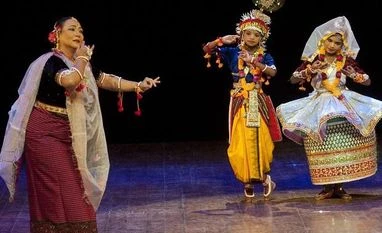 "NCPA Mumbai Dance Season hopes to bring dance out of the auditoriums")












