More than 12 countries have announced plans for net zero emissions by 2050, including China, Japan, South Korea, South Africa and Canada.
Apart from the emphasis on renewable power, it also talks about targeting 13 per cent hydrogen in final energy, including as a fuel for industry and transport and transforming bioenergy with liquid biofuels surpassing petroleum products by 2040 to fuel industry and transport, including hard-to-abate sectors such as aviation. Although electricity becomes a growing and important energy carrier in India, electrification of all energy services remains elusive, admits the study. Some industrial processes and various forms of heavy transport need very high temperatures or very high energy-density fuels, which cannot be delivered by electricity technologies in the near term. Hydrogen emerges as the solution here for the NZE scenario. “It can be burned directly in furnaces, used to reduce iron ore and offers an alternative to battery-electric systems for heavy transport when used in a fuel cell electric vehicle. Green hydrogen can be produced by electrolysis using renewable energy." It sees the hydrogen economy beginning to operate in the early 2030s, putting India at the forefront of emerging hydrogen industrial technologies.”

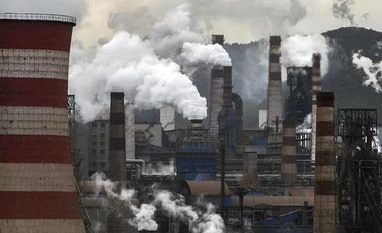 "Net zero emissions by 2050 needs higher use of hydrogen, bio fuels: Study")










 Connect with us on WhatsApp