
No climate finance for hydropower: 'Rivers for Climate' declaration
COP26, i.e., the Conference of Parties that meets annually to hold climate change negotiations, is to take place at Glasgow in the UK from October 31
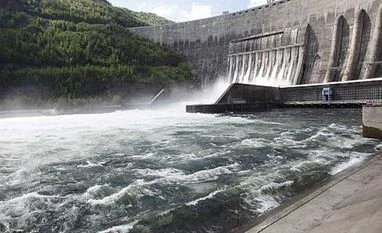 "No climate finance for hydropower: 'Rivers for Climate' declaration")
WebinarsNew
Deep DiveNew
Explore Business Standard
COP26, i.e., the Conference of Parties that meets annually to hold climate change negotiations, is to take place at Glasgow in the UK from October 31
With less than 40 days to go for COP26, 300 organisations from 69 countries have urged the governments and global leaders to not use climate funding for "so-called sustainable hydropower schemes" as part of their 'Rivers for Climate' global declaration.
COP26, i.e., the Conference of Parties that meets annually to hold climate change negotiations, is to take place at Glasgow in the UK from October 31 and symbolically, the activists, environmentalist and academics came together at Glasgow to drive home their demands on Tuesday.
Representing the views of civil society, peoples' movements, Indigenous Peoples' organisations, scientists, and conservationists, the Declaration called out the proliferation schemes being peddled under an erroneous pretence of sustainability, a release from International Rivers, a non-profit working for river conservation, said.
The main demands include: A prohibition of funds committed under the Paris Agreement for the construction of new hydropower dams; Countries to remove new hydropower dams from their Nationally Determined Contributions (NDCs); A just and sustainable energy transition and economic recovery that centres people and ecosystems and Investment to rapidly upscale truly renewable energy sources capable of delivering needed energy access while transitioning away from destructive fossil fuels and hydroelectric dams.
All nations declare their NDCs -- national level actions to combat climate change -- ahead of the COP and negotiate for carbon space even when all of them will come together to regulate emission to keep the global temperatures from rising 1.5 degrees compared to the pre-industrial era.
"Hydropower is not clean energy. We're at an unprecedented moment in history; facing the triple threats of a runaway climate crisis, large-scale biodiversity loss, and a global pandemic," said Global Advocacy Manager for Waterkeeper Alliance, Chris Wilke.
Incentivising and expanding hydroelectric power construction would not only fail to prevent catastrophic climate change, but it would also worsen the climate crisis by exploding methane emissions and diverting scarce climate funds away from meaningful energy and water solutions in a world that is already grappling with severe impacts of climate change, the release said.
This call to world leaders is based on growing scientific and social impact evidence of the dangers associated with hydropower dams and the risks of pursuing investment in dams for climate change mitigation.
The Global Declaration holds that: Free-flowing rivers, wetlands, and natural lakes have immense value for the welfare of the ecosystems they sustain, humankind, and survival on the planet; Rivers play a vital role in sequestering carbon and building climate resiliency as against, hydropower dams preventing rivers from serving these critical functions. "In fact, rivers help regulate an increasingly volatile global carbon cycle by drawing an estimated 200 million tons of carbon out of the air each year," the release said.
Stating that hydropower dams are vulnerable to climate change and will be further impacted by changing hydrology, the Global Declaration said, "Our climate and hydrological cycles are changing. And hydropower dams are particularly ill-suited to adapt to these changes. Unprecedented floods, landslides, and other such disasters exacerbated by climate change are already threatening the safety of dams around the world, with more extreme weather events elevating the risk of catastrophic dam collapses," it said.
One amongst those who endorsed the Global Declaration from India is Himanshu Thakkar of the South Asia Network on Dams, Rivers and People. "Sustainable hydropower as a solution to climate change is a myth," Thakkar said, addressing the press conference virtually, and added, "Hydropower projects are hugely, adversely impacted by climate change and also act as force multipliers for the impacts, thus worsening the climate crisis, particularly for the vast millions of people who depend on rivers, forests, and floodplains for their food and livelihood security."
Building and operating new hydropower projects in areas like the Himalayas, and South Asia is worsening disaster potential and vulnerabilities manifold and is destroying the resilience options for river and mountain dependent communities. "Any claim to the contrary by the hydropower industry will not stand up to independent scrutiny, as was seen under the work of the World Commission on Dams," he said.
"The call by some industry groups to grow global hydropower by 60 per cent likely means damming all remaining free-flowing rivers which would be a tremendous blow for global freshwater biodiversity," said Eugene Simonov from Rivers without Boundaries.
--IANS
niv/dpb
(Only the headline and picture of this report may have been reworked by the Business Standard staff; the rest of the content is auto-generated from a syndicated feed.)
First Published: Sep 23 2021 | 9:48 AM IST


 Connect with us on WhatsApp