Nurse registrations in India have not kept pace with doctors, shows data

In 2014-15, while there were 3.4 registered nurses per operational doctors in the country, this declined to 3.1 in 2020-21
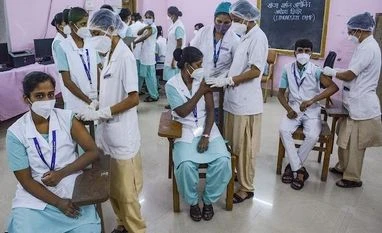
Nurses at a training college in Thane are vaccinated for Covid-19 on Friday, July 30, 2021. (PTI Photo)
Ishaan Gera New Delhi
1 min read Last Updated : Jan 26 2022 | 11:23 PM IST

Don't want to miss the best from Business Standard?

On Wednesday, Prime Minister Narendra Modi inaugurated 11 medical colleges in Tamil Nadu. At the inauguration, the PM remarked that the number of medical seats in the country (both undergraduate and graduate) had increased nearly 80 per cent since 2014.

Last year, during the Winter Session, the government, in a reply in Lok Sabha, had informed the country that the number of medical colleges had increased from 404 in 2014-15 to 596 in 2021-22.


Analysis of AISHE data between 2014-15 and 2019-20 shows that there has been a 72 per cent increase in enrollments in general medicine. In terms of students passing out of the undergraduate courses though there has been a lesser increase. The number of students passing out of MBBS increased only 51.2 per cent during this period. The growth in the number of doctors was even lesser at 35.7 per cent. There were only 959,198 doctors registered by state medical councils and national medical councils in 2014-15, which increased to 1.3 million in 2020-21.

During the same period, enrollments in Ayurveda increased 113 per cent.

However, that is not the cause for worry. Even though the increase in number of nursing institutes was similar to the increase in medical colleges, the country added 24.1 per cent more nurses between 2014-15 and 2020-21, as compared to 35.7 per cent doctors.


The ideal nurse to doctor ratio is three nurses per doctor, but as per government data the nurse per doctor ratio declined 9 per cent during the period under consideration. In 2014-15, while there were 3.4 registered nurses per operational doctors in the country (government assumes only 80 per cent of registered doctors are operational), this declined to 3.1 in 2020-21.


As per AISHE data, pass outs from nursing undergraduate courses had increased 29.9 per cent between 2014-15 and 2019-20, as compared to 51.2 per cent increase for students in general medical undergraduate courses.

One subscription. Two world-class reads.

Already subscribed? Log in

Subscribe to read the full story →
*Subscribe to Business Standard digital and get complimentary access to The New York Times

Smart Quarterly

₹900

3 Months

₹300/Month

SAVE 25%

Smart Essential

₹2,700

1 Year

₹225/Month

SAVE 46%
*Complimentary New York Times access for the 2nd year will be given after 12 months

Super Saver

₹3,900

2 Years

₹162/Month

Subscribe

Renews automatically, cancel anytime

Here’s what’s included in our digital subscription plans

Exclusive premium stories online

  • Over 30 premium stories daily, handpicked by our editors

Complimentary Access to The New York Times

  • News, Games, Cooking, Audio, Wirecutter & The Athletic

Business Standard Epaper

  • Digital replica of our daily newspaper — with options to read, save, and share

Curated Newsletters

  • Insights on markets, finance, politics, tech, and more delivered to your inbox

Market Analysis & Investment Insights

  • In-depth market analysis & insights with access to The Smart Investor

Archives

  • Repository of articles and publications dating back to 1997

Ad-free Reading

  • Uninterrupted reading experience with no advertisements

Seamless Access Across All Devices

  • Access Business Standard across devices — mobile, tablet, or PC, via web or app

Topics :Medical collegesnurse

Next Story



