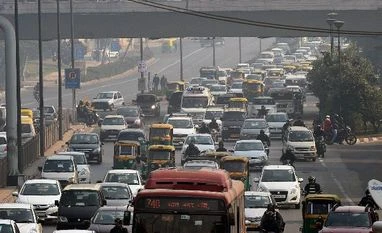
There is rare political consensus across parties that some drastic solutions are needed to reduce congestion on Delhi's roads and the odd-even road rationing scheme has actually worked to achieve that. But parties would like to see public transport infrastructure beefed up before another spell of odd-even is rolled out.
On Monday, Gopal Rai, the Delhi transport minister, announced that the scheme could be back, although the jury is out on the effect it had on reducing pollution. Most experts claim that while it may have eased traffic, the scheme did not improve smog in the world's most polluted capital.
But what is important is that Delhi's traffic happiness index saw a dramatic change with incidents of road rage coming down, traffic crawl improvement and better travel time.
Rai flagged two concerns - the fact that odd-even could paradoxically put more cars on the road with citizens opting for an odd and even numbered car to beat the system; and the problems of parents dropping children to school and picking them up.
Congress leader from Delhi Sharmishtha Mukherjee said the party conceded that congestion had been brought down. But the experiment was defeated by exceptions. "Why should two-wheelers be permitted on the roads? The same rule should apply to them as well. Similarly, women drivers have to undergo ridiculous conditions - they should not be ferrying male passengers or a child above 12… is all this workable? A rule is a rule. It should be applicable to all. Exceptions give rise to corruption," she said.
Former bureaucrat Shakti Sinha, who campaigned for Bharatiya Janata Party in the Delhi elections, believes a drastic intervention was needed to reduce congestion, but getting 50 per cent of cars off roads did not make economic sense. "I believe the experiment did not last long enough for us to make up our minds whether it worked or not."
"Some indicators have changed: but whether pollution has really gone down? I don't really know," he said.
Mukherjee said the government needed to work on public transport because when odd-even was tried out, schools were closed so there were 3,000 more buses available to commuters. "Now schools are open. So what is the government going to do to provide last-mile connectivity?"
However, it is clear that another stint of the odd-even experiment is not only on the cards, but will see little political resistance.

 "Odd-even scheme gets political endorsement")


 Connect with us on WhatsApp