P V Sindhu's run to the Olympic semi-final hasn't happened overnight
Hard work, after all, comes naturally to Sindhu. As a teenager, she used to travel more than 50 km for practice every morning, and always report on time
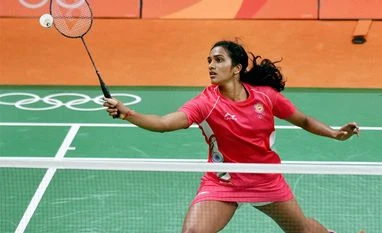
Shuttler PV Sindhu plays a shot in the pre-quarter Finals match against Tai Tzu Ying of Chinese Taipei. Photo: PTI
On Wednesday, P V Sindhu must have woken up feeling on her young shoulders the weight of expectations of more than a billion people. That strange awareness that you are your country’s sole medal hope amid an abject campaign comes with its chunk of mental squeeze.
Going by India’s tantalisingly close shaves with a medal at the Rio Olympics — Abhinav Bindra and Dipa Karmakar being the major casualties — this was one match that should have swung the other way. Sindhu and Wang Yihan was one of those tense, overwrought occasions that oscillated frenziedly before culminating into a hugely memorable and significant win for the 21-year-old Indian who has endured such an unforgiving year.
On another day, the pivotal review at 18-18 in the first game would have been awarded in Wang’s favour, and Sindhu’s counter-punching shots would have continually missed — which they often do — the lines on the opposite side of the net. That Sindhu was able to live with her Chinese opponent’s woozy speed was an achievement in itself, but here Sindhu did what no Indian athlete has been able to do in Rio: dig deep and go the extra mile.
In a match that brought with it familiar fine margins, Sindhu was brave enough to pull through — words of praise that we’ve seldom got the opportunity to use for Indian athletes these Olympic Games. And, Wang is no ordinary opponent: she is ranked second in the world and won silver at the London Games four years ago.
Sindhu likes a fight. Her tenacious — and, sometimes fitful — brand of badminton often sees her fade away deep into matches but the intensity is forever palpable; the will to stay with her opponent right till the end always undiminished.
But the embracing of this fire quality hasn’t come easy. Her coach, the master mentor Pullela Gopichand, has worked tirelessly in the last couple of years to transform the gangly Hyderabad girl from soft-spoken protégé to feisty world-beater.
Sindhu always had the talent but Rio has been an example of that ability truly taking off. For a player who has won back-to-back medals at the World Championships, a charge to the Olympic semi-finals should be treated with routine elation more than anything else. Yet, it is somehow a major cause of celebration.
When on song, Sindhu can dictate a game with ferocious attacking shots combined with subtle change-ups. But she is also often erratic with her stroke-play, giving up ground from comfortable winning positions. That she could sustain the momentum against a more fancied opponent in a crunch match at a major tournament is a clear reflection of the hard yards put in by her and, of course, Gopichand.
Gopichand has helped Sindhu plug obvious gaps in her game. He has found a way to turn the opponent drop shot — a tactic employed by several players owing to Sindhu’s long frame — into an attacking opportunity. The two have spent hours perfecting that cross-court backhand flick. Hard work, after all, comes naturally to Sindhu. As a teenager, she used to travel more than 50 km for practice every morning, and always report on time. A run to the Olympic semi-final clearly hasn’t happened overnight.
Sindhu would have gleefully accepted a semi-final against Japan’s Nozomi Okuhara before the tournament began. Not that the 21-year-old Japanese girl is a walk in the park. She is the reigning All England champion and enjoys a 3-1 head-to-head against Sindhu. But Sindhu will back herself to come up trumps against an opponent her age, as opposed to the vastly experienced duo of Carolina Marin and Li Xuerui, who will be battling each other in the other semi-final.
Sindhu’s father, Ramana, is incidentally a former volleyball player who was a part of the Indian team that won bronze at the 1986 Asian Games. For the semi-final, he must tell her daughter to “dump”, a volleyball term used for a surprise attack that catches the opposite defence off-guard. To ensure a historic Olympic medal, both Sindhu and Gopichand would know that the regular tricks might just not be enough. Hopefully, Sindhu can amaze one final time.

 "P V Sindhu's run to the Olympic semi-final hasn't happened overnight")


 Connect with us on WhatsApp