
Passage of 8 bills boosts Rajya Sabha productivity to 24.2% in third week
The passage of eight bills in the Rajya Sabha during the third week of the Monsoon Session has helped increased productivity of the House to 24.2 per cent
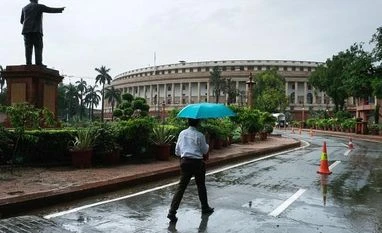 "Passage of 8 bills boosts Rajya Sabha productivity to 24.2% in third week")
WebinarsNew
Deep DiveNew
Explore Business Standard
The passage of eight bills in the Rajya Sabha during the third week of the Monsoon Session has helped increased productivity of the House to 24.2 per cent
The passage of eight bills in the Rajya Sabha during the third week of the Monsoon Session has helped increased productivity of the House to 24.2 per cent.
This has gone up from last week when the productivity was 13.70 per cent. In the first week, the Upper House of Parliament registered high productivity of 32.20 per cent, according to the data with the Rajya Sabha research department.
The overall productivity of the House for first three weeks of the Monsoon Session has been 22.60 per cent, a Rajya Sabha official said.
The Upper House has witnessed repeated disruptions in the last three weeks since the session started on July 19. Opposition members have been creating uproar in the House demanding a discussion on the Pegasus snooping row and on the farmers issue, among other matters.
In the past week, 68 members from 17 parties discussed the bills before their passage.
The parties whose members took part in the discussions include AIADMK, Aam Aadmi Party, BJD, BJP, Congress, CPI, CPI(M), DMK, JD(U), NCP, RJD, RPI, Shiv Sena, TDP, TMC (Moopanar), TRS and YSRCP.
These 17 parties along with nominated members of the Rajya Sabha account for 87 per cent of the present strength of the House.
The TMC and the SAD that are insisting on a discussion on the Pegasus controversy and farmers' issues account for less than 6 per cent of the strength of the House, officials pointed out.
The House spent 3 hours 25 minutes on the passage of these bills.
Of the total time of 28 hours and 30 minutes during this week, one hour and 41 minutes were spent on the Question Hour during which 17 starred questions were taken up.
A total of 21 hours and 36 minutes were lost due to disruptions in the House during the week, they said.
Due to continued disruptions since the session started, 60 hours and 28 minutes of the Rajya Sabha have been lost out of the total available time of 78 hours and 30 minutes.
Officials said of the total functional time of 17 hours and 44 minutes, the House spent 4 hours and 49 minutes on government bills, 3 hours and 19 minutes on the Question Hour and 4 hours and 37 minutes on the short duration discussion on COVID-19 related issues during the first three weeks.
Due to repeated disruptions, as many as 197 Zero Hour occasions and 153 Special Mention occasions were lost during the session, they said.
(Only the headline and picture of this report may have been reworked by the Business Standard staff; the rest of the content is auto-generated from a syndicated feed.)
First Published: Aug 07 2021 | 4:26 PM IST

