Relaxing hard stance on Modi was not about taking sides: Michael Steiner
Interview with German ambassador to India
Nayanima Basu The move to end the boycott of Bharatiya Janata Party's prime ministerial candidate Narendra Modi was not about siding with any political party but showing respect to Indian democracy, says German Ambassador
Michael Steiner. He tells Nayanima Basu the challenge for India's new government will be to bring effective and reliable governance. Excerpts:
How does Germany view the Indian elections? It is a great privilege for an ambassador to follow the biggest democratic election process worldwide from close quarters; people cast their vote in record numbers, and there is a lot at stake. Whoever forms the next government will need to address pressing issues such as effective and reliable governance and economic reforms, besides issues such as the respect for women's rights. India is the world's largest democracy and a global player in the making. India has been Germany's strategic partner for more than a decade. India's elections matter to us. Whoever comes to power, we look forward to engaging with the next government in India.
Germany was the first to say the European Union (EU) would put an end to boycotting BJP prime ministerial candidate Narendra Modi... It was a common European approach. It was not about taking sides. It was about respect and trust for India and its institutions. We respect India, its institutions and Indian democracy.
What should be the foreign policy, especially towards the India-EU free trade agreement (FTA) of the next government? Please understand that it's not for a foreign ambassador to give public advice on India's foreign policy, especially as the election process is in full swing. Our position on the EU-India FTA is well known. It would be a win win-situation for Europe and India. Not just a boost for both our economies, but also a strategic decision on our relationship for the next decade. Trade and investment are the real international hard power of the 21st century and the motor for growth and development of our economies.
You recently said the India-EU FTA talks should resume soon. However, a lot of area has already been covered. Is there a need to start the talks afresh? Of course, we don't need to start from scratch. There are a few remaining important but solvable issues. After so many years of negotiations, it is high time we came to a comprehensive agreement, especially in the light that many FTAs have either been concluded or are under negotiation by the EU and others. India should not miss the train.
What will be Germany's most important demand from the new government as far as bilateral trade and industry ties are concerned? It is not about demands from the next government. It is about our common interest. We have the same socio-economic basic philosophy: What you call inclusive growth - sarvangeen vikas - we call social market economy - Soziale Marktwirtschaft. The better India fares, the more the Indian economy thrives; the more inclusive growth you have, the better for Germany. And vice versa. Pre-condition for that is good, reliable and efficient governance. That is also the pre-condition for good investment from German firms. And good investment is the pre-condition for inclusive growth. In the end, our economies have the same wish list.
Last year, Germany held a signature music concert in Kashmir with maestro Zubin Mehta, which drew a lot of criticism. Looking back now, do you think you were able to achieve your objectives? First of all, it drew mega applause. The Kashmir Concert was a lifetime experience and a great success, especially for the Kashmiris. On September 7, 2013, Kashmir got connected with the world through the best of European and Kashmiri musical heritage. About 2,700 guests came - far more than envisaged. A phenomenal 63 per cent of TV viewership in Srinagar saw the concert live. More than 50 TV and radio stations tuned in. Millions around the globe could see the beauty of Kashmir. In the end, the Kashmir Concert proved that cooperation and mutual enrichment between European and Islamic culture is possible even against tough challenges from interested sides, as we faced them. And the positive reactions we received from all over India were simply overwhelming.
This year marks the silver jubilee of German reunification. Do you think India, Pakistan and Bangladesh should follow Germany's footsteps and work towards reunification? The fall of the Berlin Wall 25 years ago was a magic moment in history, which changed the course of world politics. It put an end to the cold war - the current Ukraine crisis left aside - and it brought about the German and European reunification. Today, reunified Germany is a prospering democracy at the heart of Europe and the EU is the largest economy in the world. The fall of the wall was heart-moving for all of us. However, every situation is not the same.

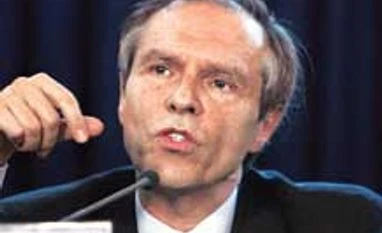 "Relaxing hard stance on Modi was not about taking sides: Michael Steiner")


 Connect with us on WhatsApp