
Research shows why second coronavirus vaccine dose is important
The study showed that the number of antibodies produced and protection offered by vaccination increased substantially after the second vaccine dose was given
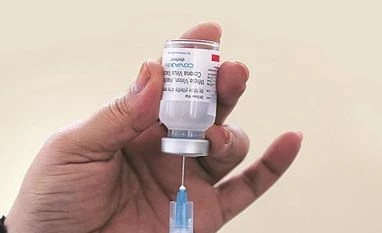 "Research shows why second coronavirus vaccine dose is important")
WebinarsNew
Deep DiveNew
Explore Business Standard
The study showed that the number of antibodies produced and protection offered by vaccination increased substantially after the second vaccine dose was given
A new study of antibodies produced in saliva after Pfizer-BioNTech Covid-19 vaccine shows both importance of second vaccine dose and updating vaccines to combat new variants of concern.
The study showed that the number of antibodies produced and protection offered by vaccination increased substantially after the second vaccine dose was given, showing the importance of receiving the second dose.
The team, including Nicole Schneiderhan-Marra at the University of Tubingen, also examined whether it offered protection against Alpha and Beta variants.
They found that while there was no reduction in neutralising antibodies against the Alpha variant, there was a substantial reduction in neutralising antibodies against the Beta variant, indicated the study, presented at the European Congress of Clinical Microbiology & Infectious Diseases.
To see how the protection offered by the vaccine changed for different variants, the team firstly profiled the antibodies generated by vaccination and then examined their neutralising capacity.
In addition to antibodies circulating within the blood, they checked for the presence of antibodies in saliva as a "first line of defence".
To do this, they adapted a previously developed assay that measures the antibodies present against SARS-CoV-2 and other coronaviruses in the blood, to include targets from variants of concern and to look specifically at the neutralising antibodies.
They collected samples from 23 vaccinated individuals (age 26-58 years, 22 per cent female) who had been vaccinated with the Pfizer-BioNTech vaccine after the first and second doses.
For control groups, the team also collected samples from 35 infected blood donors, 27 infected saliva donors and 49 non-infected saliva donors and also control samples of blood and saliva sourced commercially from before the pandemic began from different age groups.
When looking at the saliva, they saw that vaccinated individuals had large amounts of antibodies present compared to infected individuals, suggesting that vaccination not only offers protection against becoming infected but should you become infected, it reduces the possibility of you transmitting it to others.
--IANS
vc/pgh
(Only the headline and picture of this report may have been reworked by the Business Standard staff; the rest of the content is auto-generated from a syndicated feed.)
First Published: Jul 10 2021 | 5:58 PM IST


 Connect with us on WhatsApp