Home / India News / S Jaishankar, Rajnath Singh call on Japan PM to discuss bilateral relations
S Jaishankar, Rajnath Singh call on Japan PM to discuss bilateral relations
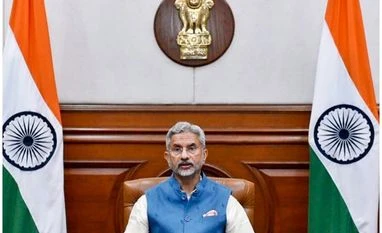
EAM S Jaishankar and Defence Minister Rajnath Singh on Friday called on Japan's Prime Minister Fumio Kishida and underlined the importance of closer coordination of policies and interests
External Affairs Minister S Jaishankar and Defence Minister Rajnath Singh on Friday called on Japan's Prime Minister Fumio Kishida and underlined the importance of closer coordination of policies and interests of the two nations to ensure peace and stability in the region.
Singh and Jaishankar attended the 2+2 Dialogue along with their counterparts from Japan -- Foreign Affairs Minister Hayashi Yoshimasa and Defence Minister Hamada Yasukazu -- on Thursday.
"Pleased to call on PM Fumio Kishida at the conclusion of our 2+2 meeting. Underlined the importance of closer coordination of policies and interests of India and Japan at this time," Jaishankar tweeted.
"Expressed confidence that the vision which he and PM @narendramodi have articulated will be realised early," he said.
Singh in his tweet said the India-Japan partnership will have a defining role to play in ensuring peace and stability in the region.
Singh during the meeting also extended his heartfelt condolences on the "sad demise" of former prime minister Shinzo Abe. Abe died on July 8 after he was shot at a political campaign event.
During the second 2+2 Dialogue, India and Japan on Thursday agreed to further enhance their security and defence cooperation, including holding the first Air Force fighter exercise. They also reaffirmed their commitment to a rules-based global order that respects sovereignty and territorial integrity of nations.
India also extended its support to Japan's plans of expanding and modernising its defence forces, including "counterstrike capabilities", in an apparent bid to deter an aggressive China.
Japan also expressed "its resolve to examine all options necessary for national defence, including so-called 'counterstrike capabilities', the statement said without naming any country.
Japan and India are members of the Quad - which includes the US and Australia a strategic grouping considered by some as a counter to China's growing influence in the Indo-Pacific region.
China claims nearly all of the disputed South China Sea, while Taiwan, the Philippines, Brunei, Malaysia and Vietnam claim parts of it. Beijing has built artificial islands and military installations in the South China Sea.
(Only the headline and picture of this report may have been reworked by the Business Standard staff; the rest of the content is auto-generated from a syndicated feed.)

 "S Jaishankar, Rajnath Singh call on Japan PM to discuss bilateral relations")


 Connect with us on WhatsApp