State scan: Repeated disasters in Uttarakhand have a human touch

Over the years, thousands of people in Dehradun and other cities and towns in the plains have encroached upon the riverbeds
NDRF
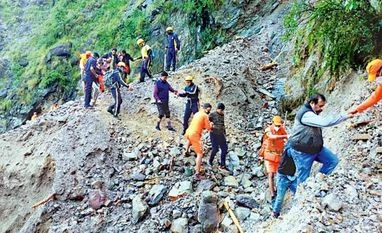
Stranded tourists being evacuated by the NDRF from a landslide-affected area. More than 75 people were killed in the recent heavy rain and floods in the state in October
Shishir Prashant
4 min read Last Updated : Nov 01 2021 | 6:04 AM IST
Uttarakhand Director General of Police (DGP) Ashok Kumar, who recently travelled extensively in the disaster-hit Kumaon region to oversee rescue operations after the floods, has given vital pieces of information.

He said a catastrophe was averted by the evacuation of the people from flood-ravaged areas.

“We evacuated nearly 48,000 people from various flood-hit areas. Of them, nearly 50 per cent were living close to rivers and nullahs in spate,” Kumar said.

According to a report prepared by the state police, the devastation could be minimised due to the timely alert the Met gave.

“Our men, especially those serving in the State Disaster Response Force (SDRF), were immediately put on high alert,” said Kumar.

More than 75 people were killed in the recent heavy rain and floods in the state in October. Environmentalists have linked these with the climate change phenomenon. There was the Kedarnath deluge in 2013, and then two major disasters followed this year. One of the them, apart from the present one, is the February 7 Rishiganga floods in Chamoli district, where more than 200 people were killed.

A preliminary estimate suggests the property and infrastructure losses were worth Rs 900 crore in the form of damages to buildings, agriculture, and roads and bridges, said state Disaster Management Secretary S A Murugeshan.

Union Home Minister Amit Shah has assured all help to the state, where Assembly elections will be held early next year. The Congress, the party in opposition, has demanded an early disbursement of the compensation and threatened to launch an agitation on the issue. Sensing the gravity of the situation, Chief Minister Pushkar Singh Dhami has visited the disaster-hit areas and asked for expediting rescue and relief work.

A central team has visited the state to assess the damage. “We will seek a package from the Centre,” said Murugeshan.

Over the years, thousands of people in Dehradun and other cities and towns in the plains have encroached upon the riverbeds. As a result, the rivers have become narrowed. These encroachments have made these rivers vulnerable to disasters. In Dehradun, the situation becomes more precarious, especially during the monsoon season, when both the Rispana and Bindal rivers turn turbulent. In an affidavit filed before the Uttarakhand High Court, the Dehradun district magistrate had said 270 acres of riverbeds and banks had been encroached upon.

Government officials and environmentalists have said the rivers are changing their courses due to floods. In many towns, they flow like drains during the non-monsoon season.

The high court has repeatedly taken serious views of such encroachments. In its various directions in the past, it asked the authorities in Dehradun, Haridwar, and other towns to ban construction by the side of the rivers. Recently the high court expressed concern over construction along the Rispana river.

In Ramnagar town, despite the Kosi river taking a dangerous shape by overflowing its embankments, the damage was, however, not much. “The Kosi was looking dangerous but by the grace of god, there was no extensive damage,” said Diwan Singh Bisht, the ruling BJP MLA from Ramnagar.

He said evacuation in the low-lying areas was timely.

Environmentalists in the hill state are concerned over indiscriminate construction activities related to hydel projects in the past few decades. The plains of Uttarakhand are the worst-hit as far as river encroachments are concerned. In the hills, hydel projects are being blamed for changing the ecology of the rivers.

“We have been witnessing nature’s erratic behaviour in the past 10 years. In 2013 the Kedarnath disaster occurred before the monsoon. This year, after the monsoon ended, there was heavy rain. This shows such disasters will be frequent,” said Anil Joshi, a top environmentalist who has received the Padma Bhushan.

Suresh Bhai, who is heading the “Nadi Bachao Andolan” in the state, said: “There are multiple factors like climate change. But yes, if you stop the natural flow of rivers, floods will occur.”

He called for an early policy on climate change from the Central government.

One subscription. Two world-class reads.

Already subscribed? Log in

Subscribe to read the full story →
*Subscribe to Business Standard digital and get complimentary access to The New York Times

Smart Quarterly

₹900

3 Months

₹300/Month

SAVE 25%

Smart Essential

₹2,700

1 Year

₹225/Month

SAVE 46%
*Complimentary New York Times access for the 2nd year will be given after 12 months

Super Saver

₹3,900

2 Years

₹162/Month

Subscribe

Renews automatically, cancel anytime

Here’s what’s included in our digital subscription plans

Exclusive premium stories online

  • Over 30 premium stories daily, handpicked by our editors

Complimentary Access to The New York Times

  • News, Games, Cooking, Audio, Wirecutter & The Athletic

Business Standard Epaper

  • Digital replica of our daily newspaper — with options to read, save, and share

Curated Newsletters

  • Insights on markets, finance, politics, tech, and more delivered to your inbox

Market Analysis & Investment Insights

  • In-depth market analysis & insights with access to The Smart Investor

Archives

  • Repository of articles and publications dating back to 1997

Ad-free Reading

  • Uninterrupted reading experience with no advertisements

Seamless Access Across All Devices

  • Access Business Standard across devices — mobile, tablet, or PC, via web or app

Topics :landslideUttarakhandUttarakhand floodUttarakhand forest fireNatural DisastersNDRF

Next Story



