4 min read Last Updated : Sep 13 2019 | 11:06 PM IST
We drive through green countryside and a boulevard of cashew trees en route to Goa’s Fazenda Cazulo. We pass the Three Kings’ Chapel, which overlooks lush paddy fields now sown with beans, since it is summer. On the left is also the home of the aristocrat Tristao de Braganca Cunha, “father of Goan nationalism”. You can feel the sense of history and deep beauty of this place even before you arrive.
And I feel like I’ve arrived at a deeper understanding of feni, a drink that is little known and largely misunderstood. At a time when a young India was focused on industrialising, Goa was already adept at the fine art of craft distillation.
As Hansel Vaz, proprietor of the Fazenda Cazulo, walks me down to the fazenda (Portuguese for farmhouse), he tells me that at 26, he gave up his job as a geologist at a multinational in the South Pacific to resurrect his family’s feni business. Four years later, in 2012, Cazulo Premium Feni was launched. No one thought that a brand of feni that was priced at least twice that of conventional feni would take off.
My early memories of drinking feni not being exactly pleasant, drinking Cazulo in 2015 proved to be a revelation. Vaz had struck the right balance in ensuring that feni’s distinctive aroma and taste were gently toned down, thereby helping feni find new audiences while at the same time ensuring that its base did not feel cheated. Also, given that younger generations of Goans preferred to drink spirits such as whisky, Vaz also invested in his brand identity to ensure that they would be proud to pull out a smart bottle of Cazulo instead. Since those early days, Cazulo has gone from strength to strength. It also launched the first World Feni Week this May, which featured a feni tasting at the Fazenda Cazulo.
A long low-slung yellow barn is our venue, its deep green doors firmly shut. We are gathered in the courtyard outside the building, where tables, a pop-up bar and barbecue are set up. Devi Singh, one of India’s top bartenders who’s also at the helm of Firefly, a bar owned by the Vaz family, mans the bar and is serving up a seasonal favourite--urraq (the first distillate of feni) and lime.
This is isn’t like any tour I’ve been on because we were all engrossed in the spell that is being cast on us as we’re surrounded with the tools, fruits, smells and people of a working distillery. Vaz then shares a piece of family lore. His grandfather had two garrafaos (Portuguese for large carafe), which could contain as much as 75 litres of feni. One was opened at a time, which was depleted through the year; the other was rested. The next year he would tap the unopened garrafao, now rested and rounded, and the empty one filled with fresh new feni.
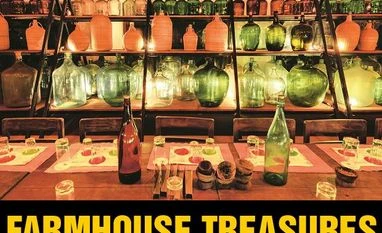
Vaz has now amassed what is probably India’s largest collection of beautiful hand-blown glass bottles, some pieces over 300 years old. He throws open the doors of a room and we’re greeted with unimaginable splendour – 1,200 garrafaos of various hues and shapes flanking a beautifully laid-out long table.
Cazulo’s brand ambassador Karl Fernandes then leads us through the tasting of their three fenis. We first taste each neat, starting with the cashew feni and then as a cocktail to showcase feni’s versatility. Next, we taste an invention called Peru Meru, which combines cashew feni, guava juice, lime and chilli delightfully. We then move to the coconut feni where we are lent a dessert cocktail and later the rarer Dukshiri expression of feni. Coconut feni, Vaz explains, has a more evolved history compared to cashew, and they made single botanical expressions of feni, gin style. The botanical expressions are fascinating, each vapour infused into a delicate drink. There are 19 types of botanical coconut expressions, each ascribed to remedy an ailment or simply enjoy. The Dukhshiri coconut feni we’re drinking has earthy tasting notes and is touted as a magical cure-all, even heartbreak!
The tasting seems short, 40 minutes flies when you are in the cellar. We exit to find a party outside; the grill is smoking, and a three-piece ensemble is playing jazz standards. There are also some special feni cocktails on offer, that have interesting names like Xicon Brute (educated brute), Castaad Ponos (top class jack fruit) and Jambul Redo (jamun buffalo).
More than a thousand people have visited the Cazulo Fazenda, paying 2,000 bucks a head for this feni tasting experience. If you’re interested too, check out cazulfeni.com.