A Mumbai resident who had recovered from Covid a while ago recently approached his doctor with an unusual request. He wanted the doctor to authenticate his identity for his bank. An involuntary shaking of his hand muscles, a post-Covid symptom, had altered his signature to the extent that the bank was not accepting it.
“Some of the people who have recovered from Covid cannot hold the pen the way they could earlier,” says O M Srivastava, co-director, infectious diseases, Sir H N Reliance Foundation Hospital, Mumbai. “I have had requests from many to certify that I have known this person for years and that this is the same person.”
According to rough estimates by doctors, 15 per cent of the people who suffer from Covid tend to get long Covid symptoms; and long Covid is known to have affected all types of human organs.
Muscular twitch is just one of the many problems people are grappling with even months after having recovered from Covid.
Neurological damage: Fatigue to sleeplessness
Seema Ghosh (name changed on request) hasn’t been able to sleep without medication for over a month. “Since getting Covid in January, I have been unable to sleep at all at night unless I take sleep-inducing medication. My doctor is trying to wean me off these meds, but the lack of sleep is stressful,” she says.
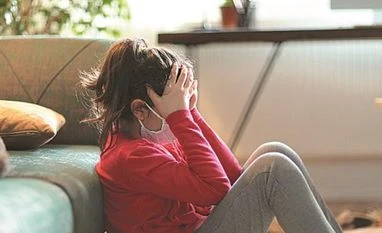
Sleeplessness and fatigue have been common post-Covid symptoms, and they are being reported in children as well.
“Three weeks after they have recovered from Covid and resumed normal life, these symptoms begin to surface. Most such patients are those who were infected by the Delta variant. For the Omicron wave, which is still recent, it is early to say how long these symptoms will persist,” says Nitin Verma, director-paediatrics at Madhukar Rainbow Children’s Hospital in Delhi.
While there are 150 different types of long Covid symptoms, most patients experience fatigue, headaches, sleeplessness, cough, muscle pain and brain fog.
In addition to sleeplessness, Ghosh also experienced involuntary shaking of the hands and legs, which she says faded away on its own after about a month.
For many, however, the Covid aftereffects are persisting much longer. In several cases, post-Covid symptoms, including muscle twitch, have lasted for more than a year after recovery from the virus.
Doctors across specialisations are, as a result, dealing with different problems, all tied together by one common factor: A previous Covid infection.
Cellular damage
Sonam Solanki, consultant pulmonologist at Masina Hospital, Mumbai, has a patient whose sense of smell has been gone for over a year-and-a-half. “He got Covid in January 2021, and recovered within a few days at home. He had a mild infection. But he has not regained his sense of smell ever since,” the doctor says.
Covid is causing changes at a cellular level, medical experts say. Solanki says that routine tests like chest X-rays or blood profiles are unable to pick up changes that explain a patient’s symptoms.
“If someone has, say, a persistent cough, the chest x-ray might be normal, and so might be the blood profile. The changes are at a cellular level,” she says.
In some patients, while routine tests like X-rays or CT-scans have not picked up abnormalities, an electron MRI of the lung tissue has shown some changes in the lung tissue.
Doctors explain that Covid is causing changes in the mitochondria of the cell, and thus the changes are deep. (Mitochondria, also called the powerhouses of the cell, generate energy.)
Some patients have reported erectile dysfunction for weeks after recovering from Covid.
Doctors are treating all cases symptomatically, prescribing vitamins, exercises and even therapy.
Dermatology to psychology
Hair fall, both in adults and children, has emerged as another post-Covid effect that people are dealing with, in several cases months after having recovered from the disease.
Skin problems such as rashes have also become common complaints in patients recovered from Covid.
“We have a post-Covid clinic where we do the full evaluation of the patients, from the perspective of pulmonology, cardiology and psychology, since any organ can be involved,” says Vikas Maurya, HoD and director, Pulmonology, Fortis Hospital Shalimar Bagh, Delhi.
Among some cases suffering from acute anxiety, doctors are also seeing if skin problems are psychosomatic.
Doctors feel that there is a need to have a centralised database to not only collate patient data but also to track these patients over a longer horizon. Discussions have already started in the Covid task force of Maharashtra on developing such a patient database.
Medical experts divide symptoms after a Covid illness into three categories: post-Covid symptoms, which last for a few weeks to a month or so; long Covid, which is when a patient experiences certain symptoms for more than three months after infection; those with comorbid conditions and other underlying illnesses who often see their disease(s) precipitate after Covid.
“This happens due to the damage Covid causes to the various organs, and also due to the treatment given to a patient during Covid — for instance, the use of steroids or anti-inflammatory medicines,” says P S Narang, director, paediatrics, Max Super Speciality Hospital, Shalimar Bagh, Delhi.
In children, cases of long Covid are low since instances of underlying comorbidities are few.
Doctors believe that better research into this subject would help in charting the direction of treatment and understanding better the long-term impact of the virus on the body.
Hari Kishan Gonuguntla, Consultant Interventional Pulmonologist, Yashoda Hospitals, Hyderabad, pointed out that "New evidence suggests that the coronavirus’s assault on the brain could be multipronged: it might attack certain brain cells directly, reduce blood flow to brain tissue or trigger production of immune molecules that can harm brain cells. Infection with the coronavirus SARS-CoV-2 can cause memory loss, strokes and other effects on the brain."