This startup promotes sustainability by helping rickshaw-pullers adopt EVs

With a 74-member team, Krishna's venture operates in several cities in Uttar Pradesh and Bihar
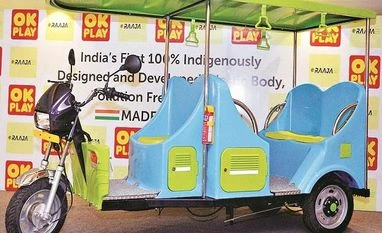
rickshaw
Representative image
Sneha Bhattacharjee New Delhi
4 min read Last Updated : Nov 30 2019 | 9:33 PM IST
The last decade has seen a major push for electric mobility to enter the mass market. Apart from climate change, there are a number of other factors that have contributed to this push, including advances in renewable energy sector, battery technology, and urbanisation. With 22 of the 30 most polluted cities in the world being in India, the central government had approved an outlay of Rs 10,000 crore for three years till 2022 to subsidise electric vehicles (EVs) and drive the adoption of electric mobility in the country.

However, despite the central government’s push, the local administration fails to reciprocate the same. Naveen Krishna, founder, SVM Green Solutions, found this to be the most challenging aspect of setting up his venture — which helps rickshaw-pullers move towards battery-operated rickshaws from the manual ones. “The local administration considers e-rickshaws as a traffic menace,” says Krishna adding how it is a challenge to convince the authorities that e-rickshaws will instead solve the last mile connectivity problems.

Krishna’s journey began in 2015 when he set up his venture in Varanasi. The plight of manual rickshaw-pullers was what moved Krishna the most. As he saw them abused and manhandled by passengers or street vendors, working long hours with hardly anything substantial to sustain themselves or their families, Krishna realised he should help them out in some way. SVM Green Solutions was the answer. The start-up helps rickshaw-pullers change over to EVs through varied support strategies — from mobilising the community and assisting them to access micro finance, to handling the purchase and delivery of the three-wheeler, fulfilling the registration process, obtaining insurance, and training them in steering the vehicle. The venture has till date been able to help 1,328 rickshaw-pullers. 

Naveen Krishna with one of the women beneficiary of SVM’s programme ‘Vahini’
With a 74-member team, the venture operates in several cities in Uttar Pradesh and Bihar. Getting here has not been easy. To involve stakeholders is cumbersome, feels Krishna. The biggest being the banking partners, who do not see the rickshaw-pullers or anyone from the below poverty line category as credible lender. “They are willing to finance only 75 per cent of the cost of an EV, which costs around Rs 1.5 lakh. But the remaining 25 per cent that is needed to be self-financed by the rickshaw puller is still a large amount,” says Krishna who took a pilot project to convince banking partners to fund 90 per cent of the cost for some 23 rickshaw-pullers. 

The unavailability of major players in the electric mobility market is another challenge. Big players despite their presence do not focus much on three-wheelers, feels Krishna. Then there are local players, who outsource from China or any other part of the world, have slowly started building their in-house capacity but again fall short when it comes to three-wheelers. “There needs to be an alignment between the policies and the stakeholders, the local and central governments,” adds Krishna. 

Krishna’s venture offers a one-window solution that improves the livelihood of rickshaw-pullers and also introduces them to the green mobility segment. In order to mobilise rickshaw-pullers and create awareness of e-rickshaws among them, the start-up even conducts campaigns and events. Once an amount of interest is generated, Krishna’s team approaches them with their services. “We also offer a pay-per-use battery-swap service, ‘SMART Charge’, aimed at giving the e-rickshaw drivers access to high-performance lithium-ion batteries with the objective of ensuring that they overcome issues like long charging time, battery maintenance, and less mileage,” he adds.

The venture has also launched a programme, ‘Vahini’, to enable more women to enter the mobility arena. The company has taken up the responsibility of installing their vehicles with a cloud-based camera and providing smartphones to ensure women safety. 

One subscription. Two world-class reads.

Already subscribed? Log in

Subscribe to read the full story →
*Subscribe to Business Standard digital and get complimentary access to The New York Times

Smart Quarterly

₹900

3 Months

₹300/Month

SAVE 25%

Smart Essential

₹2,700

1 Year

₹225/Month

SAVE 46%
*Complimentary New York Times access for the 2nd year will be given after 12 months

Super Saver

₹3,900

2 Years

₹162/Month

Subscribe

Renews automatically, cancel anytime

Here’s what’s included in our digital subscription plans

Exclusive premium stories online

  • Over 30 premium stories daily, handpicked by our editors

Complimentary Access to The New York Times

  • News, Games, Cooking, Audio, Wirecutter & The Athletic

Business Standard Epaper

  • Digital replica of our daily newspaper — with options to read, save, and share

Curated Newsletters

  • Insights on markets, finance, politics, tech, and more delivered to your inbox

Market Analysis & Investment Insights

  • In-depth market analysis & insights with access to The Smart Investor

Archives

  • Repository of articles and publications dating back to 1997

Ad-free Reading

  • Uninterrupted reading experience with no advertisements

Seamless Access Across All Devices

  • Access Business Standard across devices — mobile, tablet, or PC, via web or app

Topics :Electric VehiclesSustainable Development GoalsElectric vehicles in Indiasustainable urbanisation

Next Story



