
Triple vaccinated can fight Omicron variant efficiently, study finds
The study, published recently in the journal Nature Medicine, tracked the antibodies of vaccinated and recovered individuals for two years
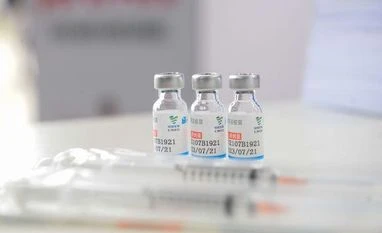 "Triple vaccinated can fight Omicron variant efficiently, study finds")
WebinarsNew
Deep DiveNew
Explore Business Standard
The study, published recently in the journal Nature Medicine, tracked the antibodies of vaccinated and recovered individuals for two years
People who are triple-vaccinated against COVID-19 develop a high-quality antibody response which can neutralise the Omicron variant efficiently, according to a study.
This also applies to people who are infected with the virus thrice, to those having recovered and then received two vaccinations, and to double-vaccinated individuals who experience a breakthrough infection, the researchers said.
The study, published recently in the journal Nature Medicine, tracked the antibodies of vaccinated and recovered individuals for two years.
The participants comprised 98 recovered persons and 73 people without prior infection. Both groups were offered vaccination with the mRNA-based Pfizer vaccine.
The researchers from Technical University of Munich (TUM) in Germany found that a total of three exposures to the viral spike protein lead to production of virus neutralising antibodies that are high in quantity as well as quality.
These high-quality antibodies bind to the viral spike protein more vigorously, and are also capable of effectively fighting the Omicron variant.
The spike protein is used by the SARS-CoV-2 virus to enter and infect the cells.
The team found the same effect in triple-vaccinated people, in those who had recovered from COVID-19 and then had two vaccinations, and double-vaccinated people who then had a breakthrough infection.
"The immunity built up or strengthened by means of vaccination is key to effective protection against future variants of the virus," said Percy Knolle, professor at TUM.
"A recent breakthrough infection -- as irritating and undesirable as it is -- has in fact the same effect as an additional vaccination on this important arm of the immune system," Knolle said.
Since the beginning of the pandemic, voluntary participants from the staff at TUM participated in the study and were regularly tested.
The researchers identified individuals who had contracted SARS-CoV-2 during the first wave of the pandemic in spring 2020, and compared them to a second group of people who had not been infected.
As predicted from its many mutations, Omicron exhibited the most pronounced evasion from neutralising antibodies compared to all other viral variants tested, they said.
"For Omicron, you need considerably more and better antibodies to prevent infection," said Oliver T Keppler from Max von Pettenkofer Institute and Gene Center Munich.
The researchers developed a new virus neutralisation test, which allowed them to analyse antibodies in many blood samples and different variants of the virus at high throughput rates.
(Only the headline and picture of this report may have been reworked by the Business Standard staff; the rest of the content is auto-generated from a syndicated feed.)
First Published: Feb 04 2022 | 6:02 PM IST


 Connect with us on WhatsApp