
UP to crackdown on rampant power theft
Aims to achieve power revenue target of Rs 36,000 crore
 "UP to crackdown on rampant power theft")
WebinarsNew
Deep DiveNew
Explore Business Standard
Aims to achieve power revenue target of Rs 36,000 crore
Uttar Pradesh government has upped is sleeves to crackdown on rampant power theft and pilferage to achieve its ambitious energy revenue target of Rs 36,000 crore.
The senior energy department officials have been directed to hit the streets for door-to-door and physical inspection of power meters installed at the premises of UP Power Corporation Limited (UPPCL) consumers. The drive would rollout from next week.
Cash strapped UPPCL is hard-pressed to meet the rising power demand, especially during summers, when the peak demand-supply gap widens to almost 3,000 megawatt (mw).
The state continues to grapple with high aggregate technical and commercial (AT&C) losses of about 40 percent, which UP targets to reduce to 5 percent by 2017 - a tall order given the enormity of the challenge.
AT&C losses are the total of technical loss, commercial loss and shortage due to non-realisation of billed amount. It also includes power theft and losses during power transmission and distribution.
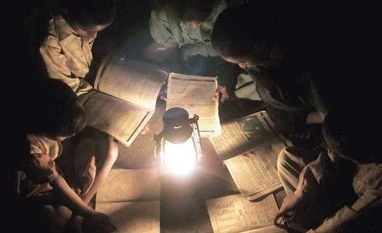
Amid rising demand, power cuts, outages and load shedding are routine - an annul feature during summers. Such situations routinely create law and order challenges for the police and district administration across the state.
UP is aiming to provide 24 hour, 22 hour and 16 hour power supply in urban centres, district headquarters and rural areas by 2016-17 before the ruling Akhilesh Yadav government seeks reelection.
Meanwhile, chief secretary Alok Ranjan has directed officials to ensure power generation in first unit of 500 mw Anpara D and first unit of 660 mw Lalitpur thermal power plants by August 2015.
He said generation should also commence by March 2016 in the 2nd unit of 500 mw of Anpara D, 660 mw 2nd unit of Lalitpur and Bara thermal power projects, so that additional 5,000 Mw of power was available before 2016 summer.
This would enhance the total availability of power in UP to around 17,000 mw to ensure quality power supply to consumers.
Further, he directed for early construction of 500 power substations, since land was already available. The respective district magistrates would coordinate with UPPCL for arranging land for the remaining substations.
The transmission projects under public private partnership (PPP) model would be expedited so that power is evacuated for consumption.
First Published: Jul 14 2015 | 5:34 PM IST


 Connect with us on WhatsApp