Flying cars! So futuristic! A world in which they’re buzzing around the skies must be dazzling – like a Popular Mechanics feature come to life!
Well, yeah. About that. It seems increasingly likely that aerospace companies and startups are rushing to embrace a world of vertical take-off robotaxis. Just don’t be surprised if it looks a lot more like “Blade Runner” than “The Jetsons.”
A Boeing Co. prototype flying taxi completed its first test flight on Tuesday and Airbus SE’s drone-style self-driving air taxi will follow within weeks – both of them trailing in the wake of Alphabet Inc. founder Larry Page, whose Kitty Hawk vehicle took its maiden flight in New Zealand last year. Even Japan, whose attachment to vintage technology like fax machines and cassette tapes is legendary, is getting in on the act, according to Bloomberg Businessweek.
Hybrid modes like the Boeing and Kitty Hawk air taxis and military vertical take-off vehicles like the Harrier and V-22 Osprey have wings for cruising flight, but still use prodigious amounts of energy to get airborne.
On top of that, there’s the size factor. The most efficient aircraft per passenger, per kilometer are mostly mid-size short-range jets like the Airbus A320 and Boeing 737 and turboprop-powered regional airliners like the Bombardier Inc. Dash-8. Larger aircraft do worse, in large part because of their long ranges and extra engines. Small planes carrying just a few passengers are equally bad.
The new breed of flying cars offers some additional cutting-edge features, of course, such as automated pilots and (in theory) the possibility of taking off and landing anywhere. Given the shaky safety record of autonomous cars and that two of the world’s busiest airports have been shut down by drones in recent weeks, you shouldn’t put too much store in that.
Commercial jets can already fly themselves in most circumstances, including landings. The reason pilots still exist is that passengers and people living under flight paths naturally expect aircraft to have a near-perfect safety record. That in turn requires onboard fail-safes and tight monitoring of urban airspace.
The challenges of traversing the world’s emerging metropolises without getting stuck in an endless traffic jam are substantial and likely to get more so in the coming decades. It’s no surprise that Boeing, Airbus and Alphabet’s Page see a substantial market for flying cars among the world’s emerging billionaire class. Still, it requires a grim vision of the future for that bet to pay off: a world in which megacities are gridlocked by decades of under-investment in infrastructure, while a growing class of ultrarich can spend lavishly to float above such constraints.
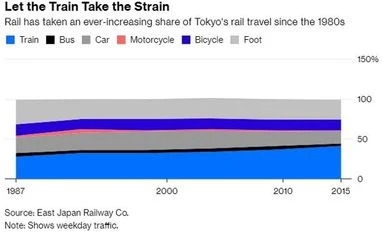
It’s ironic, then, that Japan of all places should be so excited by this technology. Tokyo is the exemplar of a radically different approach to urban transport: a metropolis of nearly 40 million people that nonetheless suffers minimal congestion, thanks to decades of spending on public transport.
Flying cars may have their share of whizz-bang charm for those who can afford them. For the rest of us, stuck on a sweaty train in the middle of an endless commute, more down-to-earth solutions look a lot more attractive.
Bloomberg

 "Will robotaxis really take off? The flying-car future looks like a dystopia")












 Connect with us on WhatsApp