Textiles Minister Smriti Irani’s shift from the high-profile Human Resources Development (HRD) Ministry during Tuesday's Cabinet reshuffle will come with its own share of challenges.
According to reports, the Rashtriya Swayamsevak Sangh was never comfortable with Irani as the HRD minister. Irani, however, on Wednesday put up a brave face saying that her new portfolio signified the "faith" shown by the prime minister and the party in her capacity to perform.
Here are the 5 key challenges which lie ahead of her:
1) Job creation: What will perhaps be the most important task ahead of her is ensuring that she can meet the prime minister's expectations on the job creation front.
The textile sector is the largest employer in the country, employing more than 32 million people and the NDA government is banking on it to absorb millions more.
The pace at which jobs are being created for the youth, juxtaposed against the poll promises made by the prime minister, had often been a stick with which the Congress has come after the present government.
Irani will have to ensure that the recently announced special package for the textile sector is put in place.
In late June, the government approved a Rs 6,000 crore special package for the textiles & apparel sector to create one crore new jobs in 3 years, attracting investments of $11 billion and generating $30 billion in exports.
2) National textiles policy: Irani will have to push through the revamped national textiles policy 2016, which has been in the works for over an year, in the Cabinet. The draft policy is likely to be taken up by the Cabinet next month to focus on achieving $300 billion exports and 35 million new jobs by 2024-25.
3) Declining exports: India exported $36.25 billion worth of textiles and related goods in 2015-16, a 2.4% decline from 2014-15. According to reports, Indian exporters have been edged out of traditional markets like Europe by exporters from Bangladesh and China.
Export of cotton-based textile goods fell in 2015-16 by 2.1%, from $37.1 billion in 2014-15 to $36.2 billion. According to industry insiders, one of the reasons for this is less availability of cotton.
Cotton-based ready-made goods, among the highest foreign exchange earners among textile products, fell 2%; cotton fabrics fell a little more than 4%.
According to Apparel Export Promotion Council head Ashok G Rajani, the high price of domestic cotton, coupled with heavy duties on import of cheaper Chinese varieties, have hampered production of cotton goods.
4) Structural issues: According to ratings agency Icra, India's textile sector suffers from structural inefficiencies, where garment manufacturing clusters are located away from fabric manufacturing clusters, which in turn are away from yarn manufacturing and cotton growing clusters.
"Fragmentation of Indian textile industry leads to lot of systemic inefficiencies and competitive disadvantage for India's textile exports. Unless these issues are addressed, the competitiveness of India's export will always remain under threat," said the agency in the wake of last month's package being declared.
With exports dipping and the high expectations from the sector, Irani might have to take a harder look at such issues.
5) Herself: Bharatiya Janata Party (BJP) insiders agree Irani’s personality was an obstacle at the HRD ministry.
For example, according to reports, Irani's spat with Mayawati over the Rohith Vemula suicide case in Hyderabad University got her eyeballs countrywide but the BJP may not have liked being pitched so aggressively on the Dalit rights agenda.

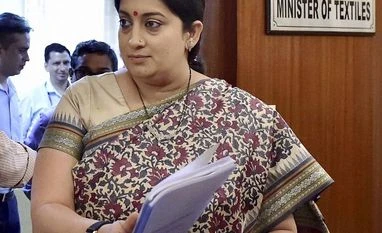 "5 key challenges for Smriti Irani as textiles minister")


 Connect with us on WhatsApp