Appetite for gold buoys growth
GDP expansion in Q2 at 6.3% after excluding gold expenditure and discrepancies
Dilasha Seth Higher gross domestic product (GDP) growth of 7.4 per cent in the second quarter of the current financial year (FY16), compared to seven per cent in the first quarter, is partly masked by India’s growing appetite for gold, besides the under-estimation of expenditure. The GDP growth would be lower at 6.34 per cent if discrepancies and valuables, mainly gold, are excluded. Besides, deflation on account of crash in commodity prices reflected in lower nominal GDP growth of six per cent against the real GDP growth of 7.4 per cent.
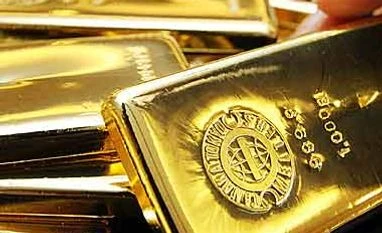
Values, comprising expenditure on gold, posted a 45 per cent growth in the second quarter compared to last year’s corresponding quarter. The liberalisation of gold import restrictions towards the third quarter of the previous financial year could also be attributed to higher spend seen on gold.
“The data show that people parked their money in gold during the second quarter,” said Pronab Sen, chairman, National Statistical Commission. The second quarter also sees higher gold imports ahead of the festive season that begins in October.
In November last year, the government liberalised gold imports by lifting the scheme under which an importer had to re-export 20 per cent of the gold they imported.
The data showed positive discrepancies of Rs 5,182 crore in the second quarter against negative discrepancies of Rs 7,811 crore during the corresponding quarter in the previous year.
Discrepancies are used to balance the product side GDP and expenditure side GDP. They are essentially inaccuracies that arise on account of mismatch between the demand-led expenditure side GDP and the consumption-led product side GDP.
Positive discrepancies arise when the expenditure side break-up-private final consumption expenditure; gross fixed capital formation; government final consumption expenditure; change in stocks; valuables; and net exports are less than the value-added GDP.
“Yes, the GDP growth comes down to 6.3 per cent in the second quarter if one excludes valuables and discrepancies. The gold demand went up substantially during the second quarter,” said Soumya Kanti Ghosh, chief economic advisor, State Bank of India. He added that the gross value-added (GVA) deflator in the second quarter of FY16 stood at -2 per cent compared with 4.5 per cent in the year-ago period.
According to Sen, one must look at GVA against the GDP. “GDP is the derived figure. GVA is what you get from the actual data; therefore, it is relevant. GDP is when you add net indirect taxes and the rest is rough estimates, errors and omissions.” However, 35 per cent growth in indirect tax collection was not factored in the GDP growth, as additional measures like increase in excise duty on oil, service tax rate, and the withdrawal of excise duty sops to the auto sector were not taken into account while calculating economic growth.
The second quarter saw a 4.5 per cent deflation in terms of wholesale price index according to the numbers released by the ministry of commerce and industry. All components of the industry sector, except electricity, gas, water supply & other utility services, are showing negative GVA deflator. The construction and mining sectors show the highest deflation at 4.5 per cent for the quarter under review.

 "Appetite for gold buoys growth")


 Connect with us on WhatsApp