
Bill to promote use of non-fossil fuels introduced in Rajya Sabha
A bill that seeks to promote the use of non-fossil fuels, including ethanol, green hydrogen and biomass, was introduced in Rajya Sabha for passage on Thursday
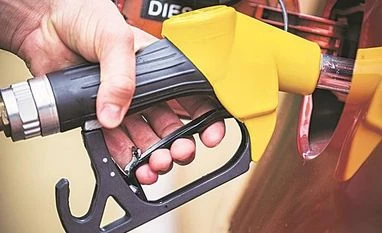 "Bill to promote use of non-fossil fuels introduced in Rajya Sabha")
Explore Business Standard
A bill that seeks to promote the use of non-fossil fuels, including ethanol, green hydrogen and biomass, was introduced in Rajya Sabha for passage on Thursday
A bill that seeks to promote the use of non-fossil fuels, including ethanol, green hydrogen and biomass, was introduced in Rajya Sabha for passage on Thursday.
The Energy Conservation (Amendment) Bill, 2022, is also aimed at helping the country achieve its international commitments on climate change.
The legislation was cleared by Lok Sabha in August this year.
Piloting the bill in the Upper House, Power Minister R K Singh said the country is working towards reduction in emissions although its per capita emissions is about one third of the global average.
"If we look at the total carbon dioxide load on the environment, our contribution is just 3.4 per cent even as our population is 17.5 per cent of the global population," he said.
Yet, the county has emerged as one of the leading nations in energy transition and climate action, he added.
"Today our non-fossil fuel power generation capacity is 42 per cent of our total capacity which is around 408 giga watt," he said, adding that this initiative needs to be carried forward.
"We have changed the way of generating electricity but that accounts for 40 per cent of the emissions. But we have to address other sectors which account for 60 per cent of emissions, which includes steel and cement manufacturing," Singh said.
In order to remain a leader in climate action, the government has brought in amendments in the legislation, he added.
"In petroleum refining, we use hydrogen drawn from natural gas. The idea is to make green hydrogen here and thereafter replace the imported natural gas and stop carbon emission," Singh said.
Similarly, in the production of fertilisers, ammonia is used from natural gas, he said.
"Now we propose to replace it with green ammonia. That is why we are bringing the amendments so that we make changes in the feedstock," Singh said.
The government also aims to address the construction sector through legislation, he added.
The amendments also seek to promote renewable energy and the development of a domestic carbon market to battle climate change.
Further, the bill seeks to introduce new concepts such as carbon trading and mandate the use of non-fossil sources to ensure faster decarbonisation of the Indian economy and help achieve sustainable development goals in line with the Paris Agreement.
The bill also provides for penalties for violations by industrial units or vessels as well as on manufacturers if a vehicle fails to comply with fuel consumption norms.
(Only the headline and picture of this report may have been reworked by the Business Standard staff; the rest of the content is auto-generated from a syndicated feed.)
First Published: Dec 08 2022 | 8:41 PM IST


