Prime Minister Narendra Modi’s visit to South Africa for the 10th Brazil, Russia, India, China, South Africa (BRICS) summit on July 25 is expected to see the five nations hit out against US president Donald Trump's protectionist trade policies, while norms on greater financial integration and investment facilitation may be discussed.
A move in this direction was decided at the recently-concluded G20 finance ministers’ meet in Buenos Aires, a senior government official said. The joint declaration of the summit, to end on July 27, may include a condemnation of growing protectionism as well as a pitch for greater financial market integration, he added.
The 8th BRICS Trade Ministers’ meet, held earlier this month in South Africa, had also expressed concern at the growing global protectionism. Most of this originated in the United States, which is the largest trade partner of China and the largest export destination for India. It had also committed to break the deadlock on certain issues at the World Trade Organization (WTO) as well as commissioned the first study on increasing value-added trade among members.
Norms on financial integration, investment facilitation
Specific norms in the areas of swap, settlement and direct investment in local currencies, consistent with each central bank's mandate is also expected. “Over the past year, greater communication among financial sector regulators have been achieved. We are looking to build on this. The previously created BRICS Interbank Cooperation Mechanism will be playing an important role in this,” a finance ministry official said.
The nations are also set to take forward discussions on the 'BRICS Investment Facilitation', a mechanism to facilitate investments among member nations. “Interestingly, India and China are also on opposite ends of the investment facilitation debate with Beijing actively pushing for a trade facilitation agreement on investments at the WTO and New Delhi insisting that any such move must be the result of a consensus,” a Delhi-based trade expert said. There may be high-decibel discussions on the services trade in which India favours liberal norms to leverage its strengths in the field while other nations are wary about opening up their markets.
Recently, the nations set up the BRICS Focal Points on Trade in Services to exchange preliminary information on the services trade.
India-China talks on agenda
Bilateral discussions between India and China on trade matters may also take place, senior sources said. Both countries have been on the receiving end of US President Trump's trade rhetoric and have been hit by higher tariffs and trade restrictions by Washington DC. Subsequently, the two nations have moved closer at the WTO. While China has reduced import duties for a wide range of Indian products, India is yet to reciprocate fully. Instead, India is threatening to impose safeguard duties on solar cell imports from China.
Beginning July 1, both the nations have reduced import duties as part of their commitments to liberalise trade under the Asia Pacific Trade Agreement (APTA). While Beijing had reduced tariffs on 8,500 items, New Delhi had responded by slashing duties on 3,142 items.
However, despite the reduction in tariffs, barriers to trade remain high, especially those that are non-tariff in nature.
“China is a state enterprise-driven economy and most imports are ordered by state companies. Issues of market access, primarily in agricultural commodities and pharma products, remain. These have to be addressed,” said Ajay Sahai, director-general of the Federation of Indian Export Organisations (FIEO).

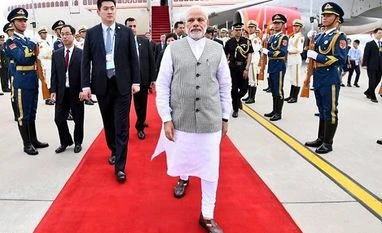 "BRICS may unite against Trump's protectionist trade policies on July 25")


