Call drops: DoT to check network quality across metros
The department will also conduct a special audit of quality of service parameters focused on network performance
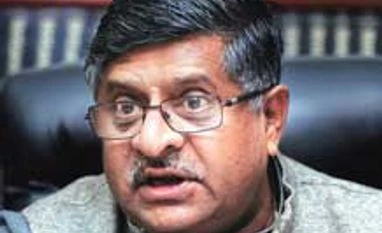
BS Reporter New Delhi The Department of Telecommunications (DoT) has ordered a special audit of quality of service parameters across the country in the wake of rising call drops. Ravi Shankar Prasad, Union minister for IT and telecom, said on Tuesday that the audit would assess the gravity of call drops and suggest remedial measures. In the initial phase, all metros and capital cities will be part of the survey.
“The department will also conduct a special audit of quality of service parameters focused on network performance. It will be done by TERM (Telecom Enforcement, Resource and Monitoring) cell,” said Prasad.
The rapid growth of data traffic in cities and sharp growth in smartphones have also led to congestion in the telecom networks. “We have sent a request to Trai (Telecom Regulatory Authority of India) to make a structure of incentives and disincentive.
ALSO READ: Call drops can invite penalties: Prasad While Trai is empowered to lay down the standards of quality of service and ensure they are followed, the issue of call drops has remained a matter of serious concern and the government is of the opinion that the efforts of Trai would need to be supplemented with action by our department,” said Prasad.
Operators have been allotted enough spectrum and they should upgrade their networks. He, however, agreed that the limited availability of sites for putting up mobile towers on radiation and other concerns was affecting the service quality, a reason often cited by telecom operators for call drops.
“The issue of call drops and campaign to remove BTS (base transceiver station) cannot go hand-in-hand. If anyone is willing to suggest any tangible evidence of adverse effect from radiation, I’ll look into it. The issue is not whether there is radiation or not - the issue is whether it is dangerous or not,” said Prasad.
He noted the World Health Organization has referred 25,000 studies till date. “Current evidence does not confirm the existence of any health consequence from exposure to EMF (electromagnetic field) radiation.”
India’s radiation rules are 10 times more stringent than international standards, he said. The DoT would approach the urban development ministry and New Delhi Municipal Corporation to enable in-building solutions for all telecom operators in all central government buildings located in metros and capital cities, Prasad added. The minister also said he would write to all state chief ministers for installing in-building solutions.

 "Call drops: DoT to check network quality across metros")


 Connect with us on WhatsApp