Centre cuts duty on refined oils, extends import tenure of pulses

For tur and urad, the cargo should arrive in India before June 30, 2022
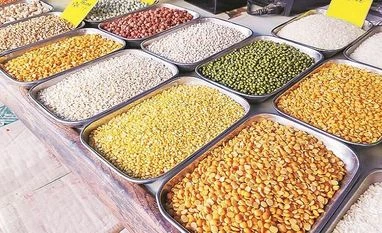
pulses, tur dal
Besides edible oils, the Centre also announced a slew of decisions on pulses
Sanjeeb Mukherjee
2 min read Last Updated : Dec 22 2021 | 1:04 AM IST
Finance minister Nirmala Sitharaman has said in Parliament that the Centre is taking a series of measures to rein in rising prices of edible oils and other essential commodities. She said this after her government announced one of the strictest clampdowns on futures trading in agricultural commodities.

Thereafter, the Centre announced a series of measures to check rising prices of two main commodities — edible oils and pulses. The government lowered the basic customs duty on refined palm oil to 12.5 per cent from 17.5 per cent till March 2022. It also allowed traders to import refined palm oil without licence for one more year till December 2022.

After reduction, the effective duty (that includes social welfare cess) on both refined palm oil and refined palmoline will come down to 13.75 per cent from 19.25 per cent.

Palm oil, both in its crude and refined forms, comprised more than 60 per cent of India’s total edible oil import of around 13.1 million tonnes in 2020-21 (November 2020-October 2021).

“The announcement of reducing import duty is contrary to our principle of atma nirbharta and may harm employment generation and value addition within India,” president of Solvent Extractors Association of India Atul Chaturvedi said.

Besides edible oils, the Centre also announced a slew of decisions on pulses. It extended the deadline for free imports of moong, tur and urad till March 31, 2022. For tur and urad, the cargo should arrive in India before June 30, 2022. For moong, the deadline for free imports ended on October 31, 2021, while for tur and urad, it will end on December 30, 2021.

Bimal Kothari, vice-chairman of India Pulses and Grains Association (IPGA) said a substantial amount of tur can arrive from Myanmar in the next few months.

Also, because of the extension of import deadlines, domestic markets will remain stable. So, there will be no upward price movement nor will the prices be very low. Vatsal Lilani, president of the Overseas Agro Traders Association of Myanmar said the extension of import deadlines will bring stability to the trade and provide continuity of shipments to India. Myanmar is one of the biggest exporters of pulses to India.

One subscription. Two world-class reads.

Already subscribed? Log in

Subscribe to read the full story →
*Subscribe to Business Standard digital and get complimentary access to The New York Times

Smart Quarterly

₹900

3 Months

₹300/Month

SAVE 25%

Smart Essential

₹2,700

1 Year

₹225/Month

SAVE 46%
*Complimentary New York Times access for the 2nd year will be given after 12 months

Super Saver

₹3,900

2 Years

₹162/Month

Subscribe

Renews automatically, cancel anytime

Here’s what’s included in our digital subscription plans

Exclusive premium stories online

  • Over 30 premium stories daily, handpicked by our editors

Complimentary Access to The New York Times

  • News, Games, Cooking, Audio, Wirecutter & The Athletic

Business Standard Epaper

  • Digital replica of our daily newspaper — with options to read, save, and share

Curated Newsletters

  • Insights on markets, finance, politics, tech, and more delivered to your inbox

Market Analysis & Investment Insights

  • In-depth market analysis & insights with access to The Smart Investor

Archives

  • Repository of articles and publications dating back to 1997

Ad-free Reading

  • Uninterrupted reading experience with no advertisements

Seamless Access Across All Devices

  • Access Business Standard across devices — mobile, tablet, or PC, via web or app

Topics :agri commoditiespulses importedible oils

Next Story



