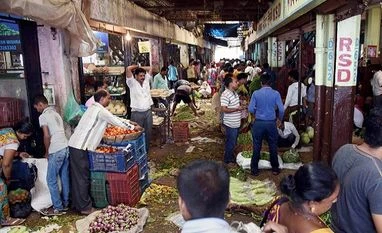
The Centre has identified 1,878 rural haats for modernisation and development of infrastructure through MGNREGA till March 2019 under Gramin Agriculture Markets (GrAM) programme in the first phase.
In total, infrastructure in around 22,000 rural haats is to be upgraded and modernised with a corpus of almost Rs 20 billion spread over 2-3 years.
Of this in the first phase, Centre has identified around 1,878 rural haats, which includes, the maximum around 564 haats in Andhra Pradesh, followed by 188 in Gujarat, 186 in Rajasthan, 182 in Tamil Nadu and 176 in Telangana. A key feature of these haats will be that they will have to be placed outside the ambit of Agricultural Produce Marketing Committee (APMC) acts to get the Central grant.
With the grant, the existing rural haats would get facilities like proper trading platforms, toilets for men and women, parking facilities for trucks and vehicles, loading and unloading facilities, small storage, office blocks etc.
In together so far, proposals sent by 18 states have been cleared for developing these rural haats.
Officials said out of the initial budget allocation of around Rs 20 billion for 2018-19, each identified medium to big sized village haat is expected to get around Rs 1.6-1.7 million, which can go up as and when the corpus expands.
The 1,878 haats which got the nod in the first phase were selected out of a list of 4,000-5,000 haats sent by the state and was vetted by the ministry of agriculture and its Directorate of Market Intelligence (DMI).
The remaining were rejected as in many cases they were for setting up on new haats, while the 2019-20 budget proposal clearly mentioned that fund allocated for GrAMs would be only for re-development of existing market infrastructure.
In most of the cases, rural haats are owned and operated by the Gram panchayats themselves.
However, selection of the rural haats for re-development and modernising hasn’t been smooth despite it being a 2019-20 budget announcement.
When the exercise first started, states just sent a list of rural haats without any details on its location, who operated it etc.
It was also not clear whether these haats operated under the ambit of local bodies or individuals.
Officials said it was then the ministry of agriculture along with the Directorate of Market Intelligence (DMI), which is an attached office under the ministry, started surveying the village haats and prepared a comprehensive list of their structure and most importantly whether they fell within the ambit of APMC acts or not.
Thereafter, now that ministry of agriculture has a full list of the rural haats based on its interaction with states and also surveys done by DMI, all proposals sent by the state to the ministry of rural development is forwarded to the ministry of agriculture for NoC.
There is a plan to link all of them through rural roads in PMGSY-3(Pradhan Mantri Gram Sadak Yojana) and add them to the e-NaM network once the re-development and modernisation is complete.

 "Centre to re-develop 1,878 rural haats in first phase under GrAM scheme")












 Connect with us on WhatsApp