Closure of cracker factories would lead to Rs 16 bn NPAs, warns industry

Industry says they will not be able to run the factories due to Apex Court's order
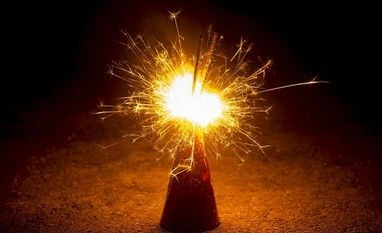
firecrackers, crackers, Diwali
Photo: Shutterstock
T E NarasimhanGireesh Babu Chennai
Last Updated : Nov 13 2018 | 12:15 PM IST
The fireworks industry in Sivakasi claimed closure of factories would not only affect around 800,000 families, who are relying on this industry, it will also lead to NPAs worth around Rs 16 billion for the banks, mainly PSUs.

It may be noted, nearly 1,400 units in this town, nearly 550 kms from Chennai, decided to close shutters from Monday protesting against the Supreme Court's order to restrict firecracker sales to only green crackers across the country.

E Mariappan, general secretary, Tamil Nadu Fireworks And Amorces Manufacturers Association (TANFAMA), the apex body which represents the units that produce nearly 95 per cent of country's firecrackers said, “We want to run the factory but cannot run due to the court's order.”

He claimed that closure of the factories would lead to NPAs worth around Rs 16 billion to the Banks, mainly PSUs.

Units are not able to generate cash to service the working capital and the interests as the Diwali sales dropped nearly 60 per cent due to SC order.

While the worth of crackers produced here is around Rs 60 billion annually, retail sales are estimated to be around Rs 100 billion. But this year the industry produced only Rs 40 billion worth of crackers. The industry feared that not even 60 per cent would have been sold and whatever was sold to the distributor did not reach the retailers due to the ban.

"We fear whether we will be able to collect the money for whatever we have sold to the distributor," said Mariappan.

P Ganesan of Sony Fire Works, one of the oldest brands in Sivakasi added that as per Supreme Court judgement, the units are unable to open the factories. Once the definition of green fireworks is clear, we can re-start our work, he added.

Meanwhile,  TANFAMA  asked the Ministry of Environment to explain and remove the ban on barium salts until an alternate chemical is found. Use of barium salts is duly approved under the Statutes and there is no sufficient cause to ban the same.

The Association also wants the ministry to explain about the legal nature of joined crackers (garlands or laris) and elaborate on how the noise standards are already prescribed under the Environment (Protection) Rules, 1986 framed by the government and to seek the court to lift the ban on joined crackers.

“We want the Ministry to explain to the court that there is no 'green cracker' as of today. That the 'SWAS', 'SAFAL' and 'STAR' as named by the CSIR-NEERI are just three products with variants which are on the theoretical / laboratory level,” claims the Association

The Association alleged that there has been no consultation with the industry so far. No application or prototypes have been submitted to the PESO for approval as prescribed under the rules. They are to be tested by the PESO for safety, stability, performance, etc before getting approved.

TANFAMA claimed that there are already 300 types of fireworks produced by the industry for the past 80 years, which are also low emission crackers or green crackers, improvised by the industry through their own technology.

While alleging that CSIR-NEERI has not suggested anything to improve these conventional products, the industry can undertake research to characterise the various chemicals and compositions to further reduce emission levels.

“The industry is always ready to accept changes as suggested by PESO or FRDC. Therefore the Supreme Court may be convinced by the MoEFCC (UOI) on the above aspects; and research may be sought to further improve fire-crackers,” TANFAMA said in the letter.

The industry, which frequently faces the threat of closure, said that the permanent remedy, therefore, will be to exempt use of fireworks from the provisions of Rule-3(3B) of Environment (Protection) Rules, 1986.

Under the provisions of Rule-3(3B), fireworks is already eligible for exemption since the emissions prevail in the atmosphere for not more than 48 hours (two consecutive 24-hours average), claims the Association.

They urged the Ministry to treat use of fireworks as 'exceptional event' since usage is short-term, as is the practice in other countries.

“Also, to bring a quick remedy, an Ordinance may be passed in this regard, so that the factories can open and give employment to its workers before disaster sets in,” said the Association.

One subscription. Two world-class reads.

Already subscribed? Log in

Subscribe to read the full story →
*Subscribe to Business Standard digital and get complimentary access to The New York Times

Smart Quarterly

₹900

3 Months

₹300/Month

SAVE 25%

Smart Essential

₹2,700

1 Year

₹225/Month

SAVE 46%
*Complimentary New York Times access for the 2nd year will be given after 12 months

Super Saver

₹3,900

2 Years

₹162/Month

Subscribe

Renews automatically, cancel anytime

Here’s what’s included in our digital subscription plans

Exclusive premium stories online

  • Over 30 premium stories daily, handpicked by our editors

Complimentary Access to The New York Times

  • News, Games, Cooking, Audio, Wirecutter & The Athletic

Business Standard Epaper

  • Digital replica of our daily newspaper — with options to read, save, and share

Curated Newsletters

  • Insights on markets, finance, politics, tech, and more delivered to your inbox

Market Analysis & Investment Insights

  • In-depth market analysis & insights with access to The Smart Investor

Archives

  • Repository of articles and publications dating back to 1997

Ad-free Reading

  • Uninterrupted reading experience with no advertisements

Seamless Access Across All Devices

  • Access Business Standard across devices — mobile, tablet, or PC, via web or app

Next Story


