Consensus eludes RBI-appointed Jalan panel on economic capital framework

One of the key mandates of the committee was to determine the level of surplus that the RBI should hold
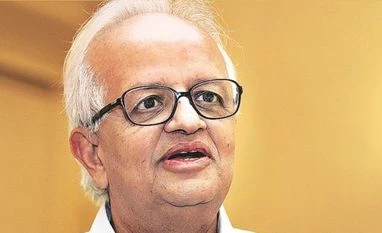
Bimal Jalan
Bimal Jalan
Somesh Jha New Delhi
3 min read Last Updated : Jun 13 2019 | 2:19 AM IST
The Reserve Bank of India (RBI)-appointed committee to review the economic capital framework of the central bank failed to arrive at a consensus during a meeting held here on Wednesday, leading to a delay in finalising its report, a top official said.

The six-member committee headed by former RBI governor Bimal Jalan decided to meet once again before submitting its report by the end of this month.

“There may be differences of opinion (among the panel members), but that’s being discussed,” an official aware of the development said, requesting anonymity.

The committee, formed in December 2018, was supposed to submit its report by April 8, 2019, but it was later given a three-month extension. One of the key mandates of the committee was to determine the level of surplus that the RBI should hold.

Wednesday’s meet was supposed to be the last one for the panel. However, there will be at least one more round of meeting to be held later this month. The main difference of opinion has arisen between the panel members and the government’s representative on the panel — Economic Affairs Secretary S C Garg — over the transfer of the RBI’s ‘excess’ capital reserves, according to a source close to the central bank.

While most panel members were in favour of a phased transfer of the RBI’s capital reserves to the government over the years, the government's view voiced by Garg is for a one-time transfer, the source said.

The government is of the view that the capital reserves held by the RBI are among the highest in the world “and is not being put to good use”, former Finance Minister Piyush Goyal had said in December. 

Goyal had also opined that the “excess” capital of the RBI could have been used “to support the banks just as was done in USA during the financial crisis.”

Usually, the RBI, which follows a July-June calendar, transfers dividend to the central government after closing its accounts in August. While transferring the dividend, the central bank keeps a share of surplus towards various risks and reserves every year, according to its economic capital framework.

The RBI needs adequate capital reserves for monetary policy operations, currency fluctuations, possible fall in value of bonds, sterilisation costs related to open-market operations, credit risks arising from the lender of last resort function and other risks from unexpected increase in its expenditure.

The RBI has maintained the view that it needs to have a stronger balance sheet to deal with a possible crisis and external shocks.
 
Capital transfer from the RBI to the government also assumes importance in the wake of dwindling tax collections and the government's desire to keep the fiscal deficit at 3.4 per cent of GDP in the Budget, the same level as was pegged in interim Budget for FY20. 

Expert committee’s mandate
 
| To review status, need and justification of various reserves and buffers maintained by RBI
| Review global best practices followed by central banks in making provisions for risks
| Suggest adequate level of risk provisioning that RBI needs to maintain
| Determine whether RBI is holding provisions, reserves and buffers in surplus or deficit
| Propose suitable profits distribution policy

One subscription. Two world-class reads.

Already subscribed? Log in

Subscribe to read the full story →
*Subscribe to Business Standard digital and get complimentary access to The New York Times

Smart Quarterly

₹900

3 Months

₹300/Month

SAVE 25%

Smart Essential

₹2,700

1 Year

₹225/Month

SAVE 46%
*Complimentary New York Times access for the 2nd year will be given after 12 months

Super Saver

₹3,900

2 Years

₹162/Month

Subscribe

Renews automatically, cancel anytime

Here’s what’s included in our digital subscription plans

Exclusive premium stories online

  • Over 30 premium stories daily, handpicked by our editors

Complimentary Access to The New York Times

  • News, Games, Cooking, Audio, Wirecutter & The Athletic

Business Standard Epaper

  • Digital replica of our daily newspaper — with options to read, save, and share

Curated Newsletters

  • Insights on markets, finance, politics, tech, and more delivered to your inbox

Market Analysis & Investment Insights

  • In-depth market analysis & insights with access to The Smart Investor

Archives

  • Repository of articles and publications dating back to 1997

Ad-free Reading

  • Uninterrupted reading experience with no advertisements

Seamless Access Across All Devices

  • Access Business Standard across devices — mobile, tablet, or PC, via web or app

Next Story



