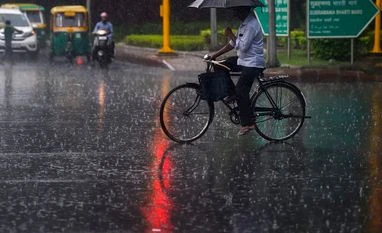
The all-India rainfall level improved further in the week ended August 22 with cumulative rain at 7% below the long-period average (LPA) compared with 9% in the preceding week. However, distribution across states remained patchy.
While rains continued to overwhelm Kerala and parts of Telangana, there was a catch-up in Madhya Pradesh (MP) and Rajasthan. Gujarat, West Bengal, Bihar and Haryana continued to be rain deficient (15-24% below LPA), while rains weakened in Punjab and Uttar Pradesh (UP).
But rainfall volume data alone is not sufficient to assess the distribution impact. It’s important to weigh that along with irrigation levels. Some states have reasonably good irrigation levels. So, weaker rains are unlikely to dent crops sown there.
And that’s where CRISIL’s Deficient Rainfall Impact Parameter or DRIP, provides a better assessment of deficiency because it considers the irrigation buffer available. The higher the CRISIL DRIP score, the more adverse the impact of deficient rains.
Haryana is a case in point where for most of July and August, rainfall deficiency has been over 12%. But the state’s DRIP score has stayed low simply because it is well irrigated. Similarly, in specific states, certain crops are better irrigated, which cushions them from weak rains.
This week’s DRIP scores highlight some strain in Gujarat, West Bengal, Bihar and Rajasthan, because they are higher than last year and above the average of the past five years.
Compared with the previous week’s list of stressed states, Madhya Pradesh dropped out as rains caught up after a brief deficiency and Bihar has been added. Last week’s DRIP scores had highlighted some emerging strain in Bihar.
Crop-wise DRIP scores though shows improvement. As of now, only rice (cultivated in rain-deficient West Bengal) appears under some strain as scores are higher than 2017 as well as the past average.
Data for one more week in August is pending after which the impact on states or crops will be clear.

 "Crisil DRIP index: Rainfall distribution across states remains patchy")











