Demonetisation effect: Demand for cash rises 7%, says RBI

Over the past four years, through its twin policies of Jan Dhan Yojana and demonetisation, the govt has taken necessary steps to expand banking services substantially.
Demonetisation
Demonetisation
Advait Rao Palepu Mumbai
Last Updated : May 22 2018 | 7:10 AM IST
People’s demand for cash continues to head northwards compared to pre-demonetisation levels despite the frequency of digital transactions going up and a substantial increase in bank deposits since November 2016.

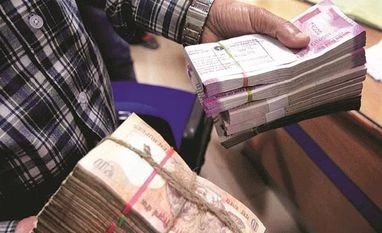
Currency with the public (CwP), or people’s demand for cash or currency, is 7 per cent higher at Rs 18.25 trillion at the end of April compared to Rs 17 trillion at the beginning of November 2016, the Reserve Bank of India’s (RBI) data reveals.
 
Over the past four years, through its twin policies of Jan Dhan Yojana and demonetisation, the government has taken necessary steps to expand banking services substantially.
 
Today, around 80 per cent of Indians have a bank account, thanks to improvements in access to formal finance channels.

While account ownership has increased by 79 per cent since 2014, around 38 per cent of all bank accounts were inactive over the course of last year, the survey found. Similarly, the Jan Dhan Yojana, which was launched in 2014, has added around 310 million banking accounts with deposits totalling Rs 812 billion as of May 9.
 
As of May 2018, total bank deposits with the countries’ commercial banks are up 24 per from Rs 21.8 trillion in November 2016 to Rs 27.2 trillion at the end of April 2018, the data revealed. During the same time period, banks distributed around 9.7 million credit cards and 130 million debit cards, bringing the total to 37.5 credit cards and 861 million debit cards as of May 2018.

M3, which is the broadest measure of liquidity in the monetary system, has grown 13 per cent in May 2018 to Rs 140.3 trillion against Rs 124 trillion prior to demonetisation. M3 includes the value of CwP, current and time deposits as well institutional money market funds and other liquid assets, along with deposits with post offices.

One subscription. Two world-class reads.

Already subscribed? Log in

Subscribe to read the full story →
*Subscribe to Business Standard digital and get complimentary access to The New York Times

Smart Quarterly

₹900

3 Months

₹300/Month

SAVE 25%

Smart Essential

₹2,700

1 Year

₹225/Month

SAVE 46%
*Complimentary New York Times access for the 2nd year will be given after 12 months

Super Saver

₹3,900

2 Years

₹162/Month

Subscribe

Renews automatically, cancel anytime

Here’s what’s included in our digital subscription plans

Exclusive premium stories online

  • Over 30 premium stories daily, handpicked by our editors

Complimentary Access to The New York Times

  • News, Games, Cooking, Audio, Wirecutter & The Athletic

Business Standard Epaper

  • Digital replica of our daily newspaper — with options to read, save, and share

Curated Newsletters

  • Insights on markets, finance, politics, tech, and more delivered to your inbox

Market Analysis & Investment Insights

  • In-depth market analysis & insights with access to The Smart Investor

Archives

  • Repository of articles and publications dating back to 1997

Ad-free Reading

  • Uninterrupted reading experience with no advertisements

Seamless Access Across All Devices

  • Access Business Standard across devices — mobile, tablet, or PC, via web or app

Next Story



