Dipam to reconstitute Bharat 22 ETF, remove shares of 3 companies

Three stocks - Nalco, EIL, REC - to be removed from ETF
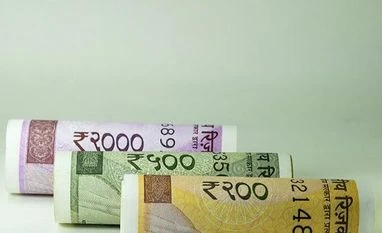
Bharat 22 ETF
Photo: Shutterstock
Arup Roychoudhury New Delhi
Last Updated : Feb 18 2019 | 10:52 PM IST
The Department of Investment and Public Asset Management (Dipam) will reconstitute its flagship exchange-traded fund — the Bharat 22 ETF — and remove shares of three companies — National Aluminum Co (Nalco), Engineers India Ltd (EIL) and Rural Electr­ification Corp — from it.  

The first two stocks will be removed from the ETF because any further offering of the financial product will take the government’s shareholding in Nalco and EIL to below 52 per cent, something it doesn’t want. 

REC will be removed because once Power Finance Corp completes its acquisition of the Centre’s stake in the REC, the latter will cease to be a state-owned company. 

This means the additional offering of Bharat 22 ETF on Thursday, in which the exchequer garnered around Rs 10,000 crore, will be its last in the current form. The next offering of the fund, likely in 2019-20, will be with new constituent stocks. 


“We will need to reconstitute the ETF. The government will work with the asset manager (ICICI Prudential) to see what other PSUs can be made part of the ETF’s basket,” said an official. The reconstitution will happen in 2019-20. 

The Bharat 22 ETF draws companies from six sectors. The constituents of the basket are Nalco, ONGC, Indian Oil, Bharat Petroleum, Coal India, State Bank of India, Axis Bank, Bank of Baroda, Rural Electrification Corp, Power Finance Corp, Indian Bank, ITC Ltd, Larsen & Toubro, Bharat Electricals, Engineers India, NBCC, Power Grid Corp, NTPC, Gail India, NHPC Ltd, NLC India, and SJVN Ltd. 

Though ITC, Axis Bank and Larsen & Toubro are not state-owned enterprises, the government owns shares in them through the Specified Undertaking of Unit Trust of India (SUUTI). The government has so far raised Rs 22,900 crore through the Bharat-22 ETF. While Rs 14,500 crore was raised in November 2017, another Rs 8,400 crore was raised in June 2018. 

The Rs 10,000 crore that Dipam earned from SUUTI will go a long way in meeting the disinvestment target of Rs 80,000 crore. 

The government’s other ETF, the CPSE ETF was reconstituted earlier this fiscal as well. Three companies were removed — Gail, Container Corporation and Engineers India, as the government holding in these companies has fallen below 55 per cent. These companies have been replaced by four other state-run entities — NTPC, SJVN, NLC and NBCC. With this, the number of companies in the CPSE ETF basket has increased to 11, as against 10 earlier.
Big Rejig
  • Three stocks — Nalco, EIL, REC — to be removed from ETF
  • Govt stake in Nalco, EIL will drop below 52% after any further offering of Bharat 22 
  • REC will be dropped upon completion of PFC’s acquisition of the Centre’s stake 
  • Reconstitution to happen next fiscal

One subscription. Two world-class reads.

Already subscribed? Log in

Subscribe to read the full story →
*Subscribe to Business Standard digital and get complimentary access to The New York Times

Smart Quarterly

₹900

3 Months

₹300/Month

SAVE 25%

Smart Essential

₹2,700

1 Year

₹225/Month

SAVE 46%
*Complimentary New York Times access for the 2nd year will be given after 12 months

Super Saver

₹3,900

2 Years

₹162/Month

Subscribe

Renews automatically, cancel anytime

Here’s what’s included in our digital subscription plans

Exclusive premium stories online

  • Over 30 premium stories daily, handpicked by our editors

Complimentary Access to The New York Times

  • News, Games, Cooking, Audio, Wirecutter & The Athletic

Business Standard Epaper

  • Digital replica of our daily newspaper — with options to read, save, and share

Curated Newsletters

  • Insights on markets, finance, politics, tech, and more delivered to your inbox

Market Analysis & Investment Insights

  • In-depth market analysis & insights with access to The Smart Investor

Archives

  • Repository of articles and publications dating back to 1997

Ad-free Reading

  • Uninterrupted reading experience with no advertisements

Seamless Access Across All Devices

  • Access Business Standard across devices — mobile, tablet, or PC, via web or app

Next Story


