Do states with 'good' health infra have lower Covid-19 death rates?

it is likely many states would have under-reported data on mortality rates, while misreporting on other key aspects concerning their health sector as well
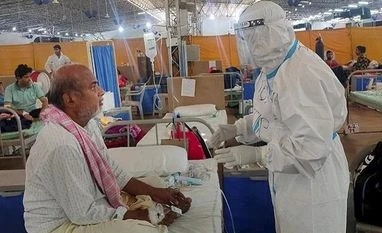
Covid-19, coronavirus, quarantine, healthcare, frontline, health workers, patients
Representative image
Subhomoy Bhattacharjee New Delhi
6 min read Last Updated : Jun 02 2021 | 3:14 PM IST
In the current wave of the pandemic, it is quite likely that many states would have under-reported data that could expose a poor show in containing the mortality rate. It turns out that states often misreport other key aspects concerning their health sector as well. For instance Chhattisgarh reports it that only has three operating X-ray machines in its community health centres, while Bihar claims a quarter of its primary health centres have at least four doctors each, the highest in India. 

This is a problem that afflicts even those states that are supposedly better off in terms of their health infrastructure. Just as states have routinely underspent their health budget, they have also been fairly dismal with the quality of data about the services they provide to their citizens. Otherwise it is difficult to believe that only a quarter of Kerala’s primary health centres are running round the clock, when Madhya Pradesh claims two-thirds of them are doing so. 

These often bizarre statistics appear year after year in union government data sets that also possibly indicate that while these data may be filed, they are rarely acted upon. Yet they have wide policy implications, since accurate data could inform state administrations on how much their medical infrastructure needs scaling up, particularly in rural areas.

For instance, to what extent has the health infrastructure of the different Indian states made a difference in the Covid-19 pandemic? Did patients stand a better chance depending on the states in which they fell ill?

The death rate per million population does not indicate any such consistent pattern (See Table: State-level medical facilities and outcomes). The outcomes seem random. While Kerala has done well and it is no surprise Uttar Pradesh looks bad; but among the better performers on death rate, one has to count West Bengal going by the statistics. Yet it is difficult to claim it has similar levels of health infrastructure as Kerala. While the most badly affected Maharashtra’s dismal outcome is no surprise, the impressive performance of Gujarat should also surprise.  

There are two possibilities of under-counting of deaths, says Bobby John, managing director of Aequitas Consulting, Delhi. A fellow of the Royal Society of Public Health, John supports companies specialising in the health care sector. Some states simply do not have the ability to count all their dead but others are deliberately undercounting, he says. 

It is possibly true. States are bad at counting medical stuff, it would seem. They seem unable to keep a sharp tab on their health infrastructure, including the quality of services provided. For instance, the percentage of primary health centres, the first port of call for rural people with a government-appointed doctor, functioning round the clock in rural areas in the major states, as reported, varies wildly. Not just Kerala, it is shown as over 87 per cent in Tamil Nadu but in next door Karnataka, it is less than 50 per cent. This is unlikely as both Karnataka and Tamil Nadu have performed similarly in deaths per million. 

At the other end, Punjab has claimed 81 per cent of its primary health centres operate 24x7, yet its death rate per million is far worse, and similar to that of Bihar.

At the sub-centre level, which is the touch point of the rural population with a health worker, the same Karnataka, which struggles to keep half its primary health centres running, manages to keep a 100 per cent electricity backup for all its sub-centres. On the other hand, Tamil Nadu, which has a sterling record for keeping its primary health centres running round the clock, has only 42 per cent equipped with a electricity back up. West Bengal claims 62 per cent of its sub-centres have a back up, but above them only 37 per cent of its primary health centres operate round the clock.

There is obviously an amazing variety of statistics that each state dishes out about the quality of its health care. Data is inconsistent not only about hard infrastructure such as buildings used by the health centres, but extremely patchy about the quality of the services provided at those centres too. As an example, we have referred to the astonishing data from Chhattisgarh that only three X-ray machines are operational at its district hospitals. Kerala too, it would seem, has not updated its similar data for years.  Bihar and Punjab are the stand-out performers among all the states in this respect. 

Again, most states have sanctioned far more doctors for their primary health centres than necessary. Tamil Nadu, for instance, needs 1,422 doctors at the rural PHCs but has sanctioned twice the number, at 2,844, with 1,777 in position. Uttar Pradesh has a similar story. Against a requirement of 2,936 doctors it has sanctioned 4,509, and finds 3,180 in position. Chhattisgarh and Karnataka are the rare states whose requirements of doctors at the PHCs match those sanctioned.

Anecdotal evidence shows a marked difference among states in terms of the health care they offer. It was also possibly on display when there was a massive upsurge in the number of cases from the end of March this year to mid-May, with a congruent rise in the number of deaths.

But the efficiencies, judging by the data supplied by the states, seem sporadic rather than well organised outcomes. The inconsistencies show there is a long road ahead for the health sector, across each state to show sustained results, in crisis or otherwise. 
Deaths per million a better metric than infection rate


The outcome shown in the table is the death rate per million population of a state. Using this data evens out the differences in the size of each state’s population. Since the data is cumulative from when Covid-19 arrived in India it is also largely independent of the respective waves in each state. 


Also we have used death figures rather than cases of infection, as the latter is clearly random. Infections are not the domain of the health department, unless those are contracted in the hospitals or clinics. But deaths per million could be a useful proxy since the more efficient number, case fatality rate which measures deaths in hospitals is not up to date in several states. 

One subscription. Two world-class reads.

Already subscribed? Log in

Subscribe to read the full story →
*Subscribe to Business Standard digital and get complimentary access to The New York Times

Smart Quarterly

₹900

3 Months

₹300/Month

SAVE 25%

Smart Essential

₹2,700

1 Year

₹225/Month

SAVE 46%
*Complimentary New York Times access for the 2nd year will be given after 12 months

Super Saver

₹3,900

2 Years

₹162/Month

Subscribe

Renews automatically, cancel anytime

Here’s what’s included in our digital subscription plans

Exclusive premium stories online

  • Over 30 premium stories daily, handpicked by our editors

Complimentary Access to The New York Times

  • News, Games, Cooking, Audio, Wirecutter & The Athletic

Business Standard Epaper

  • Digital replica of our daily newspaper — with options to read, save, and share

Curated Newsletters

  • Insights on markets, finance, politics, tech, and more delivered to your inbox

Market Analysis & Investment Insights

  • In-depth market analysis & insights with access to The Smart Investor

Archives

  • Repository of articles and publications dating back to 1997

Ad-free Reading

  • Uninterrupted reading experience with no advertisements

Seamless Access Across All Devices

  • Access Business Standard across devices — mobile, tablet, or PC, via web or app

Topics :CoronavirusHealthcare sectormedical industryPrimary health care

Next Story



