Home / Economy / News / Don't get dewy-eyed on renewables: CEA
Don't get dewy-eyed on renewables: CEA
Under any plausible scenario, coal will provide about 60% of India's power needs until 2030: CEA
premium
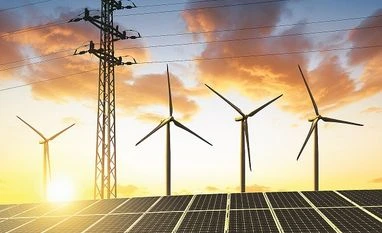
Need of the hour: The renewable energy sector will truly benefit from large spend in innovation and market development that improves efficiency and reliability
Raising questions over the current method of costing for renewable energy, Arvind Subramnian, the government's chief economic advisor (CEA), said bidding was not the best way of finding this in India. At the same time, he warned against India falling in the trap of ‘coal imperialism’ being imposed by developed nations. He said it should continue to invest in coal as the base load till 2030.
Speaking at the Darbari Seth Memorial Lecture, the CEA laid down 10 propositions to balance the renewable versus fossil fuel market dynamics. “Coal is both the source of livelihoods for millions and the locus of many communities But, coal is also the source of several development pathologies—corruption, crime, mafias, Maoist insurrection—captured in the term the “resource curse”. So, the rise of renewables poses both a threat to those livelihoods and communities but it may also afford an opportunity to escape from the attendant pathologies,” he said.
He said the intermittency of renewable energy, land cost, building a grid for it and, most important, the cost of displacing coal needed to be accounted in the cost of renewable energy. “We must be abundantly cautious about claims on behalf of renewables. Properly costed, renewables will achieve true parity (in social terms) with coal only in the future.”
He added that proper estimates of the full costs of renewables are still elusive. “One thing is clear. The recent prices bid at solar auctions in India are not a true reflection of the true cost, both because of the plethora of subsidies available and because there has been strategic under-bidding in the reverse auctions, as in coal and telecommunications. In fact, there is an important lesson here for renewables, to avoid the experience of thermal power in creating excess capacity,” said the CEA.
Calling coal and renewables ‘Siamese Twins’, he said, “The declining prices of renewables is threatening to up-end the thermal power sector. And, as prices are renegotiated because power buyers—the discoms—are themselves financially strapped, this threat will extend to renewables themselves. Second, India needs coal in the short to medium term; renewables are part of the energy answer but they also come with hidden costs, which must not be overlooked in our headlong embrace of (these).”
Subramanian said for a country struggling to provide basic electricity to a fourth of the population—the 'carbon imperialism' on the part of advanced nations could spell disaster. “Under any plausible scenario, coal will provide about 60 per cent of India’s power needs until 2030. It will, and perhaps should, remain the country’s primary energy source because it is the cheapest fuel available. We must shape the national and global narrative and not be stampeded by the rhetoric of carbon imperialism,” he added.
Read this article for free
Register to continue reading premium journalism and analysis from Business Standard.

 "Don't get dewy-eyed on renewables: CEA")












 Connect with us on WhatsApp