Dry runs for DBT in fertiliser to start from December
Dry run is first step for launch of the pilot for DBT; December deadline implies much of Rabi sowing season would have passed
Sanjeeb Mukherjee New Delhi The Centre expects the dry run of direct benefit transfer (DBT) in fertilisers in the remaining 14 identified districts could be started from December despite the cash crunch following demonetisation. This is because fertiliser is sold on credit by dealers in most places.
Dry run is the first step for the formal launch of the pilot for DBT in fertilisers. A December deadline also implies that much of the Rabi sowing season, at least in the districts identified in north India, would have passed.
So far, of the 16 identified districts for the pilot, DBT is in operation in the two districts of Krishna and West Godavari in Andhra Pradesh.
The government has modified its concept of DBT for fertilisers because of the typical nature of subsidy distribution in it.
Unlike liquefied petroleum gas or foodgrains, the Centre won’t credit the subsidy in the bank accounts of beneficiaries, which in this case have to be farmers. Instead, as soon as a farmer purchases a bag of fertiliser, he’ll have to identify himself through a point-of-sale (PoS) device placed with the retailer. Aadhaar number or Kisan Credit Cards will be the basis of identification.
The farmer will buy fertiliser at a subsidised rate itself and not at market price, which is the case with most such experiments.
Once the farmer identifies himself, a recommendation of his soil condition and fertiliser requirement will be generated, which he may or may not follow.
Thereafter, the difference between the market rate and subsidised amount will be credited into the bank account of the manufacturer. Initially, the subsidy will be paid weekly and then on a real-time basis as and when the system stabilises. The PoS devices will have to be purchased by the companies themselves.
Officials said the decision to rework the traditional DBT structure in the case of fertilisers was taken because the quantum of subsidy is fairly large in case of fertilisers.
At present, fertiliser companies produce receipts of their sale at each district duly authenticated by company representatives and chartered accountants, after which more than 90 per cent of the subsidy is credited within two months.
“The change in conventional DBT manner has been made not only because the quantum of subsidy is large but also because it is difficult to identify actual farmers from those who till someone else’s land,” an official explained.
The central government feels the savings due to better targeting and stopping of pilferage would start flowing in only when DBT is implemented across the country. However, it will take some time and will depend on the success of the pilots.
According to officials, of the fertiliser Budget of around Rs 75,000 crore, at least 20 per cent could be saved through better targeting.

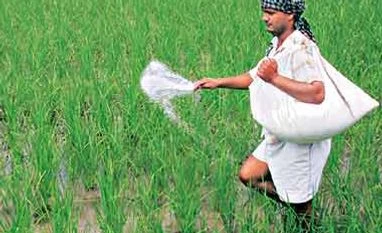 "Dry runs for DBT in fertiliser to start from December")


 Connect with us on WhatsApp