
E-education can reduce inequalities in educational outcomes: Eco Survey
Online schooling has taken off in a big way during the Covid-19 pandemic
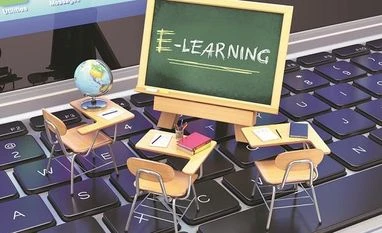 "E-education can reduce inequalities in educational outcomes: Eco Survey")
WebinarsNew
Deep DiveNew
Explore Business Standard
Online schooling has taken off in a big way during the Covid-19 pandemic
Online schooling, which has taken off in a big way during the COVID-19 pandemic, can help reduce inequalities in educational outcomes if it is well-utilised, the Pre-Budget Economic Survey said on Friday.
Quoting the Annual Status of Education Report (ASER) 2020 Wave-1 (Rural), the Survey pointed out that the percentage of enrolled children from government and private schools owning a smartphone increased from 36.5 per cent in 2018 to 61.8 per cent in 2020 in rural India.
"...if utilised well, the resultant reduction in the digital divide between rural and urban, gender, age and income groups is likely to reduce inequalities in educational outcomes," it added.
The Economic Survey 2020-21 was presented by Finance Minster Nirmala Sitharaman in Parliament earlier in the day.
It noted that the government is implementing several initiatives to make education accessible to children and facilitate learning during the COVID-19 pandemic.
One of the initiatives is PM eVIDYA that aims to enable multi-mode and equitable access to education for students and teachers.
Around 92 courses have started and 1.5 crore students are enrolled under Swayam MOOCs which are online courses relating to NIOS, it added.
To mitigate the effect of COVID-19, Rs 818.17 crore is allotted to states/union territories to promote online learning through digital initiatives and Rs 267.86 crore for online teacher training under Samagra Shiksha Scheme.
PRAGYATA guidelines on digital education have been developed with a focus on online/blended/digital education for students who are presently at home due to closure of schools, while the 'Manodarpan' initiative for psychological support has been included in Aatmanirbhar Bharat Abhiyan.
The Economic Survey 2020-21 observed that India will have the highest population of young people in the world over the next decade and that the ability to provide high-quality educational opportunities to them will determine the future of the country.
The Survey stated that India has attained a literacy level of almost 96 per cent at the elementary school level. Citing data from the National Sample Survey (NSS), the literacy rate of persons of age 7 years and above at the All India level stood at 77.7 per cent.
Female literacy remained below national average among social groups of SC, ST, OBC, including religious groups of Hinduism and Islam, it added.
To provide quality education in schools and institutions of the government in affordable and competitive manner, the government had announced the new National Education Policy, 2020 replacing the 34-year old National Policy on Education, 1986.
(Only the headline and picture of this report may have been reworked by the Business Standard staff; the rest of the content is auto-generated from a syndicated feed.)
First Published: Jan 29 2021 | 5:45 PM IST


 Connect with us on WhatsApp