E-learning to be new normal as govt plans TV channel for schoolkids

Infectious disease hospital blocks to come up in all districts; public health labs to manage pandemics
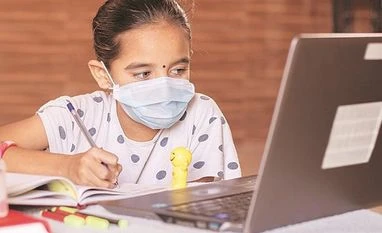
e-learning, online classes
Sitharaman also spoke about encouraging research in health care and having a National Institutional Platform for One Health by the country’s apex health research body ICMR
Sohini DasVinay Umarji Mumbai/Ahmedabad
4 min read Last Updated : May 17 2020 | 11:00 PM IST
Finance Minister Nirmala Sitharaman made three announcements on Sunday that will help make India’s health as well as education infrastructure pandemic-ready. One, to have infectious disease hospital blocks in all districts. Two, to have integrated public health labs in all districts and block levels to manage pandemics. And, three, launch of one TV channel each for classes I to XII under PM e-Vidya initiative. 

At a time when a large number of population still does not have internet access, especially in rural areas, education through TV will help boost school education, said Rukmini Banerji, chief executive officer of Pratham, an innovative learning organisation.

Sitharaman also spoke about encouraging research in health care and having a National Institutional Platform for One Health by the country’s apex health research body Indian Council of Medical Research (ICMR). She also mentioned about implementation of the National Digital Health Blueprint under the National Digital Health Mission. This, too, is an important step in the times of the current pandemic when we need to address the grass-root levels through telemedicine, and digital tools.
The chief executive officer (CEO) of a leading private diagnostic lab told Business Standard that the plan to have integrated public health labs at district and block level is a step in the right direction. “How much time this will take would depend on how fast the states choose to act on the advisory. The lacunae in India is that health is a state subject and the Centre’s decisions relegate to mere advisories with each state taking up a distinctive approach,” he said. 


But he also said having pathology labs in all blocks is not a project that the government can pull off alone. 

“It has to be a public-private partnership model.” 

However, the problem with PPPs in the diagnostics space typically has been that they have not been very viable. “The payments are almost always released late by the government and this has discouraged many leading corporate chains to participate in government tenders,” he said on grounds of anonymity.
 
PPPs in the area of telemedicine have been working though. For example, Apollo Hospitals Enterprises (AHEL) has been working on some projects. Vikram Thaploo, CEO, telehealth, AHEL, said they run 115 tele-opthalmology centers in Andhra Pradesh. It has 100 digital dispensaries (telemedicine centers) in Jharkhand. Apollo also has some e-emergency centers in Himachal. 

These are PPP projects in various states where some of the doctors were from government, some from Apollo. Thaploo said such models could easily be scaled up on a national level.

Another health industry insider said India already had the infrastructure of 250,000 common service centers at the Panchayat level under the Digital India mission. These could be now leveraged to disseminate information around Covid-19.
Edtech firms like Toppr are willing to join the bandwagon by assisting the government through digital and TV medium. “We will be happy to assist in anyway we can. Our video lectures are free for all students of classes V-XII across CBSE, ICSE, and major state boards,” said Zishaan Hayath, CEO and co-Founder, Toppr.

Sitharaman also said that top 100 universities will be permitted to automatically start online courses by May 30. But varsities are waiting for more clarity on the same. 

According to a senior faculty member in Delhi University, the announcement on online courses could be on the similar lines of a recent one by the All India Council for Technical Education (AICTE). 

“There is a proposal going on in DU at the UG-level, where some courses are being offered by a number of colleges online. While UGC has not come up with such a proposal for universities and colleges, online courses may now be part of their syllabi after today's announcement,” the faculty member said.

Ashok Varma, social sector leader, PwC India, said the decision to allow top 100 NIRF-ranked institutions to offer online courses was a part of the Budget, though accelerating the implementation by allowing them by May-end is a welcome move. 

One subscription. Two world-class reads.

Already subscribed? Log in

Subscribe to read the full story →
*Subscribe to Business Standard digital and get complimentary access to The New York Times

Smart Quarterly

₹900

3 Months

₹300/Month

SAVE 25%

Smart Essential

₹2,700

1 Year

₹225/Month

SAVE 46%
*Complimentary New York Times access for the 2nd year will be given after 12 months

Super Saver

₹3,900

2 Years

₹162/Month

Subscribe

Renews automatically, cancel anytime

Here’s what’s included in our digital subscription plans

Exclusive premium stories online

  • Over 30 premium stories daily, handpicked by our editors

Complimentary Access to The New York Times

  • News, Games, Cooking, Audio, Wirecutter & The Athletic

Business Standard Epaper

  • Digital replica of our daily newspaper — with options to read, save, and share

Curated Newsletters

  • Insights on markets, finance, politics, tech, and more delivered to your inbox

Market Analysis & Investment Insights

  • In-depth market analysis & insights with access to The Smart Investor

Archives

  • Repository of articles and publications dating back to 1997

Ad-free Reading

  • Uninterrupted reading experience with no advertisements

Seamless Access Across All Devices

  • Access Business Standard across devices — mobile, tablet, or PC, via web or app

Topics :Nirmala Sitharamane-learninghealth careonline coursesPM Narendra Modi

Next Story



