Environment concerns on shale gas weigh heavy on govt mind
Draft of shale gas policy has been sent for inter-ministerial consultation-to ministry of finance, environment, law & planning commission
Shine Jacob New Delhi As the government is trying to finalise a shale gas policy, it wants to build in environmental safeguards into the overall framework.
The ministry of petroleum and natural gas is engaged in extensive consultations with the environment ministry to ensure that once the actual work starts there are no glitches.
According to an official close to the development, the draft of shale gas policy has been sent for inter-ministerial consultation—to the ministry of finance, environment, law and planning commission.
While the petroleum ministry is confident to address all the green concerns, the environment ministry is worried over the water requirement for using fracking technology, besides land-related issues.
As per the suggestions made by the petroleum ministry, a steering committee would look into the issue on projects, audits and accounts with a view of exploit resources optimally, which would have representatives from contractors, environment ministry and National Environmental Engineering Research Institute (Neeri).
Apart from this, a model contract will be prepared by the petroleum ministry in consultation with ministries of law, finance and environment.
Among the rights that environment ministry enjoy include that of leading a panel of agencies, that are competent to carry out the environment impact assessment for the blocks allotted to successful bidder.
“Though to meet our energy requirement, the policy is important but there, are concerns related to water availability, underground water pollution and also the leakage of chemicals during extraction. Before going ahead with the policy, the ministries should address all these things,” says B K Chaturvedi, member (energy), Planning Commission.
Once the Cabinet clearance is in place, the bidding process is expected to start within the first half of this financial year and at least 100 blocks would be up for grabs. This is expected to cover three major basins of Cambay, Krishna Godavari and Ranigunj.
A senior environment ministry official said that it would raise its opinion before the Cabinet, as and when the policy is taken up.
Though the environment ministry has its concerns over the issue, industry is confident enough to tackle the fracking-related issues.
“There are technologies of fracking where air and gas can be use instead of water. By the time bidding process is complete and blocks get allotted, these technologies would evolve and can even be used in India,” believes Atul Chandra, president-international operations, Reliance Industries.
Experts believe that in basins like Cambay and Krishna Godavari, land availability may also be not an issue.
According to the petroleum ministry, the immediately recoverable resource would be in the range of 2-6 TCF and is likely to see an investment of about $2 billion in the initial exploration stage.

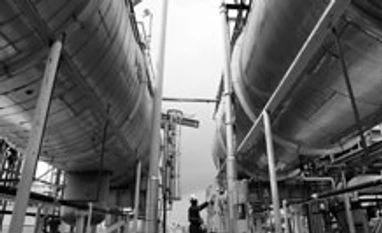 "Environment concerns on shale gas weigh heavy on govt mind")


 Connect with us on WhatsApp