Home / Economy / News / Export outlook might remain robust despite second coronavirus wave
Export outlook might remain robust despite second coronavirus wave
According to preliminary data released by the ministry of commerce and industry, India's merchandise exports nearly trebled in April to $30.21 billion as compared to last year
Merchandise exports may not get deeply impacted over the next few months, despite a second wave of the pandemic causing localised lockdowns across the country.
According to preliminary data released by the ministry of commerce and industry, India’s merchandise exports nearly trebled in April to $30.21 billion as compared to last year. The growth was on account of a low-base effect due to a stringent nationwide lockdown in 2020. It was also supported by strong demand across sectors in the first month of the current fiscal year.
Experts believe the growth was also on the back of demand from western nations, where the impact of Covid-19 is waning. They said that the trend is likely to remain sustainable.
“Some developing countries have emerged out of Covid or at least the worst part of the pandemic is over for them. Therefore, demand has been increasing. As long as India is able to supply, there is no full lockdown, and there is more positive demand from western countries, there is going to be a pick up. Besides, (in April) a good part of exports may also be related to medicines and drugs, as well as that of refined petroleum products,” said DK Srivastava, chief policy advisor at EY.
“This trend will be sustainable, as long as there is no supply-side disruption due to Covid-19. As long as a full-fledged lockdown is not declared, supply-side will not be adversely affected,” added Srivastava.
Founder chairman of Trade Promotion Council of India Mohit Singla said healthy demand in labour-intensive sectors such as man-made yarns, ceramic and jute products in April shows that demand in the western markets is picking up.
India has been reporting over three lakh new infections for close to two weeks now. Several states such as Maharashtra, Delhi, UP and Jharkhand, among others, have imposed complete or localised lockdowns to stop the spread of the virus. While some nations have slowly started recovering from the disruption caused by the pandemic, the second wave is yet to hit its peak in India.
According to Japanese brokerage firm Nomura, while both exports and imports remained largely resilient, despite the second wave, imports may take a hit temporarily over the next two months.
“We expect the current strength in global growth to buoy exports, as the second wave of lockdown measures imposed by states largely allow manufacturing firms in export-oriented sectors and goods transport services to operate,” said a report released by Nomura.
However, it feels that import growth could be marginally impacted in May and June, with the economic impact from the second wave becoming more evident and domestic consumption retracting.
“Overall, we expect imports to marginally soften sequentially in the next two months, but then rebound after June as the lockdowns flatten the pandemic curve and as restrictions will likely be gradually relaxed in June,” the report said.
According to preliminary data, merchandise imports in April were $45.45 billion, up 165.99 per cent, driven by gold, metals, medical products and electronic goods. Trade deficit was $15.24 billion, up 120.34 per cent year-on-year. The deficit was $16.30 billion in April 2019.
Read this article for free
Register to continue reading premium journalism and analysis from Business Standard.

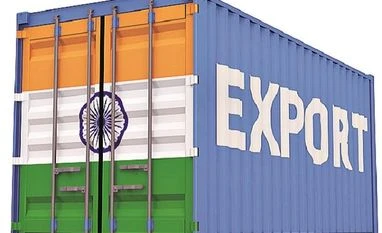 "Export outlook might remain robust despite second coronavirus wave")










 Connect with us on WhatsApp