
Ferrochrome industry seeks Patnaik's push to restore export duty
Plagued by financial stress and concerns of cheaper imports from China and Malaysia
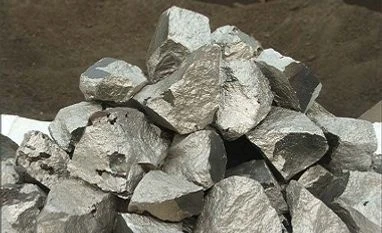 "Ferrochrome industry seeks Patnaik's push to restore export duty")
WebinarsNew
Deep DiveNew
Explore Business Standard
Plagued by financial stress and concerns of cheaper imports from China and Malaysia
The 2016-17 Budget had removed the export duty on chrome ore. Ferrochrome makers decried the move, saying it will lead to dumping of cheaper ferrochrome by China and kill value addition.
"Restoration of export duty shall help in bringing some EBITDA (earnings before interest, taxes, depreciation and amortisaion) margin for the ferrochrome manufacturing companies and help in servicing interest cost which will be beneficial for the banks and the overall economy. We request your kind personal intervention in the matter so that the 30 per cent export duty on chrome ore and concentrates can be restored with immediate effect", Rajeev Singh, director general, Indian Chamber of Commerce (ICC) said in the letter to Patnaik.
Ferrochrome plants have made huge investment for setting up of manufacturing facilities and are creating jobs, but these industries are suffering low capacity utilization and becoming NPAs (non-performing assets) and financially stressed. The current capacity of ferrochrome making facility is 1.69 million tonne per annum (mtpa) whereas the capacity utilization is only approximately 60 per cent. This is mainly due to non availability of chrome ore and concentrates at viable prices and the restoration of export duty of 30 per cent is extremely crucial to ensure that domestic prices of chrome ore and concentrates are viable.
In 2012, the Odisha chief minister had written to the union mines ministry, advocating a complete ban on chromite. Allowing chrome ore exports would lead to depletion of reserves in two decades, he apprehended. Patnaik had cited the example of Zimbabwe, which despite having 10 per cent of the global chromite reserves, had banned exports of the mineral ore.
On the contrary, India's chromite reserves were scarce at 56 million tonne, corresponding to a meagre 0.6 per cent of the world's deposits. Around 97 per cent of all chrome ore reserves were concentrated in Odisha.
Annual chrome ore requirement of the domestic ferrochrome ore industry is pegged at about 4.5 million tonne and this calls for conserving the finite ore for the sake of value addition.
Moreover, exports of ferrochrome can generate much higher foreign exchange for the country compared to the export of raw chrome ore and concentrates.
First Published: May 19 2016 | 6:30 PM IST


 Connect with us on WhatsApp