Fertiliser ministry drafts first-ever National policy
Seeks Rs 4,000 cr fund allocation from Plan Panel and Budget; received no support in entire 12th plan period
Anindita Dey Mumbai
The ministry of chemicals and fertilizers has started a review of the newly proposed national chemical policy and this time, it is seeking fund allocation from the Planning Commission and the Budget.
The policy, aimed at coping up with feedstock shortage in the chemical and petrochemicals sector, is being drafted by the ministry, which has received no allocation from the planning commission for the entire twelfth plan period.
The National Chemical Policy has been framed for the first time owing to emerging challenges. Officials explained that the potential of the chemical sector is huge. A conservative estimate puts the growth rate at 11 per cent, and a turnover of $224 billion by 2017. The plan envisages India to be a hub for research and development for the subcontinent and neighbouring countries.
"The outlook of the policy is to strengthen the academics and research in the sector rather than launching schemes and doling out funds", said an official source. To achieve this aim, the policy is considering starting courses on safety and launching a national chemical centre.
In this regard it has sought an allocation of around Rs 1,125-1,200 crore. It proposes to start a full-fledged institute to launch degree courses in safety with an allocation of Rs 500 crore and an additional Rs 500 crore for a research and development institute. The national chemical centre, to be launched with an allocation of Rs 50 crore, aims to formulate environment and human-friendly policies and contain risks posed by chemicals. This is aimed at streamlining legislation governing the industry and making entities concerned responsible for their acts. The industry, at present, is governed by multiple legislations under several ministries such as the Environment Protection Act, 1986; Factories Act, 1948; Motor Vehicles Act, 1988; Explosives Act, 1884; Disaster Management Act, 2005; CWC Act, 2000 and Land Acquisition Act, 1894.
Besides, a technology upgradation fund will be set up at a cost of Rs 250 crore for which the department seeks an allocaton of Rs 125 crore from the government and a similar amount will be raised from the industry by imposing a chemical cess on it.
Apart from this, a policy for allocation of feedstock to best-suited products, rather than based on priority sectors, is on the anvil. Officials explained that natural gas should be a priority for the fertilizer sector, coal for power and naphtha for petrochemicals, rather than the current approach of treating a sector as the priority and all available feedstock distributed as priority to it.

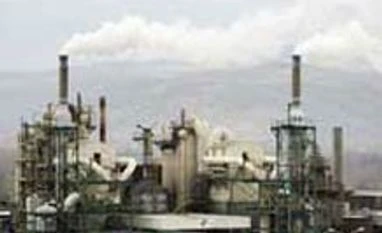 "Fertiliser ministry drafts first-ever National policy")


 Connect with us on WhatsApp