Fitch retains India's sovereign rating at the lowest investment grade

It pointed to weakness in fiscal consolidation and the "difficult but improving" business environment
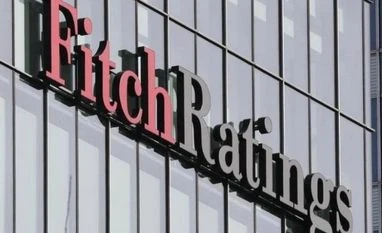
Fitch rating agency
Fitch rating agency
Indivjal Dhamsana New Delhi
Last Updated : Apr 28 2018 | 1:45 AM IST
Despite Moody's upgrade, Fitch Ratings on Friday retained India's sovereign rating at the lowest investment grade.

It pointed to weakness in fiscal consolidation and the "difficult but improving" business environment. And, mentioned the Rs 130-billion fraud at Punjab National Bank and said the recent capital infusion by the government into state-owned lenders would be absorbed by resolution  of their bad debts, rather than fresh lending.

With this, two of the three global rating agencies, Fitch and S&P, have kept India at the bottom of the investment grade. Fitch also retained its earlier outlook on India's ratings at 'stable'. 

The finance ministry had argued for an upgrade by Fitch, in line with what Moody's Investors Service did in November last year. Fitch had previously upgraded India's sovereign rating from the junk grade on August 1, 2006.

"Fitch Ratings has affirmed India's Long-Term Foreign-Currency Issuer Default Rating (IDR) at 'BBB-, with a stable outlook," the rating agency said.
India's rating balances a strong medium-term growth outlook and favourable external balances, with weak fiscal finances and some lagging structural factors, including governance standards and a still-difficult but improving business environment, it said.

Fitch added that weak fiscal balances, the Achilles' Heel in India's credit profile, continue to constrain its ratings. "General government debt amounted to 69 per cent of Gross Domestic Product (GDP) in 2017-18, while fiscal slippage of 0.3 per cent of GDP in both FY18 and FY19, relative to the government's own budget targets of last year, implies a general government deficit of 7.1 per cent of GDP," it said.

The Centre's fiscal deficit slipped to 3.5 per cent of GDP in FY18, against the target of 3.2 per cent. The Centre has projected the deficit to come down to 3.3 per cent of GDP for the current financial year, higher than the original target of 3 per cent. However, the rating agencies take both the Centre and states' fiscal deficits into consideration. 

The central government aims to gradually reduce its fiscal deficit but would not hit the three per cent ceiling of the Fiscal Responsibility and Budget Management (FRBM) Act before March 2021, well beyond its current electoral term, Fitch noted. 

"The Indian economy is less developed on a number of metrics than many of its peers. Governance continues to be weak, as illustrated by a low score for the World Bank governance indicator. India's ranking on the United Nations Human Development Index also indicates relatively low basic human development," it said.

On equity infusion by the government into public sector banks, it said: "These banks are likely to need additional government capital, however, in particular after a recent high-profile fraud case involving $2.2 billion in Punjab National Bank."

Most of the capital injection is likely to be absorbed by losses associated with non-performing loans' resolution, rather than to fund new lending. Fitch expects the sector-wide non-performing assets ratio to rise to 11.5 per cent of total loans by the end of FY18, up from 4.6 per cent in FY15, due mainly to stricter implementation of standards.

After the previous rating upgrade on August 1, 2006, Fitch had changed the outlook to negative in 2012 and then again to stable in the following year, though it kept the rating unchanged at the lowest investment grade.

D K Srivastava, chief policy advisor at consultancy EY, said rating agencies are generally extra cautious. India is leading in global economic growth. However, the two factors cited by Fitch -- fiscal imbalances and business environment -- are critical, he said. 
While the government is taking action on improving the business environment and resolution of bad debt problems, results on ground are yet to be visible, he said. 

Fitch expects RBI to start raising the policy rate from next year.

One subscription. Two world-class reads.

Already subscribed? Log in

Subscribe to read the full story →
*Subscribe to Business Standard digital and get complimentary access to The New York Times

Smart Quarterly

₹900

3 Months

₹300/Month

SAVE 25%

Smart Essential

₹2,700

1 Year

₹225/Month

SAVE 46%
*Complimentary New York Times access for the 2nd year will be given after 12 months

Super Saver

₹3,900

2 Years

₹162/Month

Subscribe

Renews automatically, cancel anytime

Here’s what’s included in our digital subscription plans

Exclusive premium stories online

  • Over 30 premium stories daily, handpicked by our editors

Complimentary Access to The New York Times

  • News, Games, Cooking, Audio, Wirecutter & The Athletic

Business Standard Epaper

  • Digital replica of our daily newspaper — with options to read, save, and share

Curated Newsletters

  • Insights on markets, finance, politics, tech, and more delivered to your inbox

Market Analysis & Investment Insights

  • In-depth market analysis & insights with access to The Smart Investor

Archives

  • Repository of articles and publications dating back to 1997

Ad-free Reading

  • Uninterrupted reading experience with no advertisements

Seamless Access Across All Devices

  • Access Business Standard across devices — mobile, tablet, or PC, via web or app

Next Story



