Piyush Goyal meets power minister RK Singh, firms on stressed projects

The issues discussed in the meeting included the power companies' opposition to RBI's February circular and the Parliamentary panel's views on the new norms
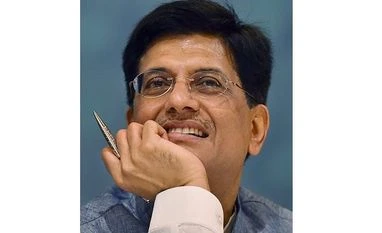
Piyush Goyal
Piyush Goyal
BS Reporters New Delhi
Last Updated : Jun 12 2018 | 12:03 AM IST
Finance Minister Piyush Goyal held a meeting with Power Minister RK Singh and power companies to discuss issues related to the stressed power assets, in the light of the new Reserve Bank of India (RBI) norms.

The meeting was a follow-up of an order by Allahabad High Court on June 1, which directed the finance ministry to conduct a meeting with stakeholders and work out a possible solution within a month.

Officials said the meeting held on Monday was preliminary and Rajiv Kumar, secretary, Department of Financial Services, was asked to convene a meeting with officials of the RBI, power ministry and the Association of Power Producers (APP) to discuss a likely resolution for stressed assets.

The issues discussed in the meeting included the power companies’ opposition to RBI’s February circular and the Parliamentary panel’s views on the new norms, offcicials who attended the meeting said.

Chief executives of NTPC, Power Finance Corporation, Power Trading Corporation, Power Secretary Ajay Kumar Bhalla and officials from railway and finance ministries were present at the meeting.

The Independent Power Producers Association of India (IPPAI) had moved a petition in the Allahabad High Court presenting their views on the RBI’s new norms. In February, the central bank mandated lenders to classify even a day’s delay in debt servicing as default. The notification mandates resolution proceedings for stressed loan accounts to be completed within 180 days. 

ALSO READ: CCI may soon lose adjudicating powers, authority to pass orders & penalise

The IPPAI felt that the RBI notification was arbitrary, irrational, discriminatory and violated Articles 14 and 19(1)(g) of the Constitution, since the stressed assets in the sector were partly due to other factors, including fuel shortage, sub-optimal loading and untied capacities.

One subscription. Two world-class reads.

Already subscribed? Log in

Subscribe to read the full story →
*Subscribe to Business Standard digital and get complimentary access to The New York Times

Smart Quarterly

₹900

3 Months

₹300/Month

SAVE 25%

Smart Essential

₹2,700

1 Year

₹225/Month

SAVE 46%
*Complimentary New York Times access for the 2nd year will be given after 12 months

Super Saver

₹3,900

2 Years

₹162/Month

Subscribe

Renews automatically, cancel anytime

Here’s what’s included in our digital subscription plans

Exclusive premium stories online

  • Over 30 premium stories daily, handpicked by our editors

Complimentary Access to The New York Times

  • News, Games, Cooking, Audio, Wirecutter & The Athletic

Business Standard Epaper

  • Digital replica of our daily newspaper — with options to read, save, and share

Curated Newsletters

  • Insights on markets, finance, politics, tech, and more delivered to your inbox

Market Analysis & Investment Insights

  • In-depth market analysis & insights with access to The Smart Investor

Archives

  • Repository of articles and publications dating back to 1997

Ad-free Reading

  • Uninterrupted reading experience with no advertisements

Seamless Access Across All Devices

  • Access Business Standard across devices — mobile, tablet, or PC, via web or app

Next Story


