From 2025, all new vehicles sold in India will need to be E20-compliant

E20 is petrol blended with extent to 20% ethanol
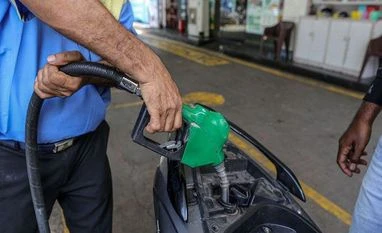
ethanol
According to the petroleum secretary, the government intends to ramp up sales of E100, or pure ethanol for running vehicles
Twesh MishraArindam MajumderShine Jacob New Delhi/Chennai
4 min read Last Updated : Nov 12 2021 | 6:10 AM IST
India is aiming to sell only petrol blended to an extent of 20 per cent with ethanol (E20) from 2025-26.

According to officials in the know, all new vehicles sold in the country will need to be E20-compliant from 2025. This move may force automakers to reconfigure their existing petrol vehicles to operate using the blended fuel.

Speaking to journalists a day after the Union Cabinet hiked the ethanol procurement price, Petroleum Secretary Tarun Kapoor said: “The target is to only sell E20 petrol across the country from 2025. E20 petrol will be introduced from 2023. In the transitional period, both E20 and E10 (petrol blended with 10 per cent ethanol) will be available but at different retail outlets (commonly called petrol pumps).”

“There will be no separate dispensing unit for E20 ethanol at a single retail outlet. The existing dispensing units will just start selling E20 ethanol,” he added.

Automakers said they were ready to be E20-compliant even as some expressed concern.

Maruti Suzuki, India’s largest carmaker that has more than a 50 per cent market share, is compliant with E10 norms and the automaker’s products will be E20-compliant by 2023.

“As far as the government is concerned, it is looking to mandate E10 and E20 compliance. So we are in line with this thinking and we have supported this part of the discussion … Ethanol is going to be one big technology that we will be using in our products,” said C V Raman, chief technical officer, Maruti Suzuki India, adding that the carmaker was planning to introduce flex fuel in its lineup. Along with petrol and CNG, flex fuel will be their third option on offer.

An executive at a foreign carmaker, however, raised concern that there could be problems over customer acceptability because the impact of ethanol fuels on on-road vehicles was likely to result in increased fuel consumption and higher maintenance costs for vehicles that were not developed to run on 20 per cent ethanol-blended fuel.

According to the petroleum secretary, the government intends to ramp up sales of E100, or pure ethanol for running vehicles.

“A separate dispensing station will need to be installed at petrol pumps for E100 since existing vehicles cannot run on it. The use of E100 as a primary fuel is being examined through a pilot project in Pune,” he said.

He said while automobile manufacturers were complaining that using E20 petrol could harm the existing vehicles, there was no conclusive evidence about it yet.


“There may be an impact on the fuel efficiency of a non-compliant vehicle after the E20 roll-out but studies are still on to decide whether there is any other adverse impact of the blended petrol,” he said.

A decision on mandating sales of only E20 optimised vehicles will be taken by the Ministry of Road Transport and Highways. But the petroleum ministry is keen on ensuring that only E20 petrol is available in the country from 2025. This is similar to the stand taken by the oil refineries when rolling out Bharat Stage VI fuels in the country, eventually forcing automobile makers to comply with stricter emission norms.

India’s oil-marketing companies (OMCs) are targeting 10 per cent ethanol blending by the end of the ensuing ethanol supply year (ESY – period from December to November) 2021-22, and 20 per cent by ESY 2025-26. As a step in this direction, Prime Minister Narendra Modi had released a report “Roadmap for ethanol blending in India 2020-25” on June 5, World Environment Day, 2021.

The Centre is focusing on ramping up ethanol supplies. According to an official statement, OMCs have contracted over 3.50 billion litres of ethanol in ESY 2020-21, up from 380 million litres during ESY 2013-14. The goal is to achieve 10 billion litres of ethanol procurement for meeting the E20 blending target.

Two-wheeler manufacturers like Bajaj Auto, TVS and Toyota have agreed to come up with engines that can work on the flex fuel. This will help their vehicles to adapt to a higher percentage of blended ethanol. TVS Motor Company and Mahindra & Mahindra (M&M) have initiated pilot projects in Pune. According to sources, TVS is credited with launching the first ethanol-powered motorcycle, called TVS Apache RTR 200 Fi E100, in 2019.

One subscription. Two world-class reads.

Already subscribed? Log in

Subscribe to read the full story →
*Subscribe to Business Standard digital and get complimentary access to The New York Times

Smart Quarterly

₹900

3 Months

₹300/Month

SAVE 25%

Smart Essential

₹2,700

1 Year

₹225/Month

SAVE 46%
*Complimentary New York Times access for the 2nd year will be given after 12 months

Super Saver

₹3,900

2 Years

₹162/Month

Subscribe

Renews automatically, cancel anytime

Here’s what’s included in our digital subscription plans

Exclusive premium stories online

  • Over 30 premium stories daily, handpicked by our editors

Complimentary Access to The New York Times

  • News, Games, Cooking, Audio, Wirecutter & The Athletic

Business Standard Epaper

  • Digital replica of our daily newspaper — with options to read, save, and share

Curated Newsletters

  • Insights on markets, finance, politics, tech, and more delivered to your inbox

Market Analysis & Investment Insights

  • In-depth market analysis & insights with access to The Smart Investor

Archives

  • Repository of articles and publications dating back to 1997

Ad-free Reading

  • Uninterrupted reading experience with no advertisements

Seamless Access Across All Devices

  • Access Business Standard across devices — mobile, tablet, or PC, via web or app

Topics :Fuel pricesEthanol priceAutomakers

Next Story



