From output surge to lack of cold storage, issues that ail potato farmers

Many a time, farmers do not bother to even come to a cold storage to take delivery of their commodity
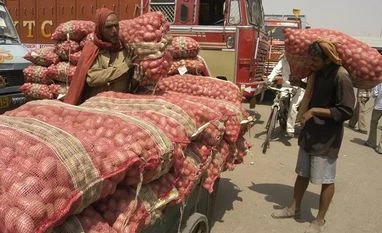
Potato
In 20 years, farm input costs for potato have doubled from Rs 3 a kg to Rs 7-8 a kg
Virendra Singh Rawat Lucknow
4 min read Last Updated : Mar 17 2019 | 12:10 AM IST
Potato farmers are facing a pricing crisis, and a number of factors are contributing to it.

“When I had forayed into the cold storage business in 1998, the retail price of potato in Uttar Pradesh was around Rs 20 a kg. These are still around the same level and sometimes lower,” says Agra-based Rajesh Goyal, acting president of the Federation of Cold Storage Associations of India.

In these 20 years, he adds, farm input costs for potato have doubled from Rs 3 a kg to Rs 7-8 a kg.

Potato sees record production year after year but falling realisation for farmers. And, the export market is bleak, due to unsuitable domestic varieties and an underdeveloped food processing value chain. Farmers willing to store more in cold storages find no space.

The price at Agra's wholesale market has been Rs 5-6 a kg since January 2017, except for the April to November period when it is Rs 10-15. Since 2005, it is only in November 2014 that wholesale prices have gone above Rs 20 a kilo.

 Not much attention has been given to farmers of potato, grown on 2.18 million hectares. Three-fourth of the crop is from only five states -- Uttar Pradesh, West Bengal, Bihar, Gujarat and Madhya Pradesh.


The central government's minimum support price (MSP) is Rs 5.5 a kg in UP and Bengal, the top two producers. This, farmers say, does not cover even the production cost. The cold storage levy is Rs 2.5 a kg. Many a time, farmers do not bother to even come to a cold storage to take delivery of their commodity, since the transport cost would be steeper than what the produce would fetch in the wholesale market (mandi).

In 2018-19, production was estimated at 52 million tonnes (mt) and consumption at 32 mt. The current season is again expected to see over-production. Prices apart, the storage facilities are already full, say growers.

“The easiest way to support growers is to promote the export market, by cultivating varieties in demand in the key markets of Europe, Russia, etc,” says Indian Horticulture Exporters' Association president Ajit Shah. He says there has been no government action on their earlier suggestions.

In 20 years, farm input costs for potato have doubled from Rs 3 a kg to Rs 7-8 a kg
For instance, he says, Russia is a big potato buyer. However, "it requires a certificate from the country of origin that the consignment is free from contamination and was grown in a contamination-free environment. This certification is not being provided by the Indian authorities, when we could export 50,000 tonnes a year to Russia," he says.

UP and Bengal account for nearly 32 and 23 per cent, respectively, of total production. Followed by Bihar and Gujarat at 15 and seven per cent. The crop's arrival in the market gains momentum in January and peaks during March, which is when farmers stock in cold storages, expecting better prices in the coming months.

Kolkata-based potato trader and cold storage owner Patit Paban Dey says there is an urgent need to increase the per capita consumption in southern India, where it is well below the national average at less than 20 kg a year. He also points to the dismal state of food processing. Processors, including makers of potato chips, are big buyers. 

Last year, the UP government had said it would procure 100,000 tonnes directly from farmers under the MSP; actual procurement was 13,000 tonnes and there was selling by growers at sub-MSP prices. The state's annual crop size is 15.5 million tonnes.

Goyal suggests the MSP window be open for at least nine months, so that prices do not crash, resulting in losses for both farmers and cold storages. “The MSP should also be higher." And, of course, the procurement.

At present, the government of Bengal has said it would procure a million tonnes at the MSP of Rs 5.5 a kg, to improve the market sentiment. The state's crop is pegged at 11 mt.

One subscription. Two world-class reads.

Already subscribed? Log in

Subscribe to read the full story →
*Subscribe to Business Standard digital and get complimentary access to The New York Times

Smart Quarterly

₹900

3 Months

₹300/Month

SAVE 25%

Smart Essential

₹2,700

1 Year

₹225/Month

SAVE 46%
*Complimentary New York Times access for the 2nd year will be given after 12 months

Super Saver

₹3,900

2 Years

₹162/Month

Subscribe

Renews automatically, cancel anytime

Here’s what’s included in our digital subscription plans

Exclusive premium stories online

  • Over 30 premium stories daily, handpicked by our editors

Complimentary Access to The New York Times

  • News, Games, Cooking, Audio, Wirecutter & The Athletic

Business Standard Epaper

  • Digital replica of our daily newspaper — with options to read, save, and share

Curated Newsletters

  • Insights on markets, finance, politics, tech, and more delivered to your inbox

Market Analysis & Investment Insights

  • In-depth market analysis & insights with access to The Smart Investor

Archives

  • Repository of articles and publications dating back to 1997

Ad-free Reading

  • Uninterrupted reading experience with no advertisements

Seamless Access Across All Devices

  • Access Business Standard across devices — mobile, tablet, or PC, via web or app

Next Story



