Garment exporters for rule changes
Industry body asks for simpler authorisation, inspection and classification norms, claim current process hinders ease of business
Subhayan Chakraborty New Delhi Nine months after the new foreign trade policy (FTP) was introduced, garment exporters have called for changing key operational mechanisms in the export process.
The Apparel Export Promotion Council (AEPC) has asked the textiles ministry to simplify the policy’s authorisation, inspection and classification norms.
Among their requests is to withdraw the need for a landing certificate for exported goods, required as proof to claim benefits under the Merchandise Exports from India Scheme (MEIS). Introduced in April 2015, the scheme aims to boost sagging exports, covering tariff lines for 5,012 items that earn duty credits.
Exporters have said getting the documents to show proof of landing at the destination country entails cost and delay. AEPC says electronic shipping bills should be sufficient for declaration of intent. While filing the said bills, exporters are required to declare they are claiming rewards under MEIS and to mark ‘Y’ in the reward item box. Recently, many had complained of inefficient Customs house agents inadvertently ticking ‘N’. Thus, though the item in many cases was eligible, once an ‘N’ had been ticked, such shipping bills were not transmitted to the online system run by the directorate general of foreign trade (DGFT).
To help exporters claim MEIS benefits in such cases, DGFT has allowed them to give physical copies of the shipping bills after filing an MEIS application to its regional authorities. However, this relaxation is restricted to exports made in April and May in 2015. An extension on this has been demanded.
Though the country's cumulative export in apparel was about $12.1 billion for the current financial year till December 2015, the industry has been spooked by Vietnam securing zero-duty access to the European Union market from 2017. Vietnam has already ousted India as the world’s third largest garment exporter. Indian products face restrictions such as a 9.6 per cent import duty, as an India-EU broad-based trade and investment agreement (BTIA) has yet to be finalised.
Also worrying is that the Trans Pacific Partnership Agreement allows export opportunities by Vietnam to the US with 17-30 per cent export duty relief. The US has accounted for 22-30 per cent of India’s garment exports in recent years. Indian exporters have to pay duty in the range of 14-32 per cent.
Analysts have warned some Indian companies might shift base to Vietnam, as they did some years ago to Bangladesh to grab a duty advantage in export and in lower labour cost.
AEPC Chairman Ashok G Rajani has called for a stimulus from the government, saying the garment export industry has the potential to generate 2,200 jobs on every investment of Rs 30 crore.
To facilitate easier transportation and to avoid corruption, the government has been requested to learn from long-term rival Bangladesh, allowing vehicles carrying finished export merchandise and headed towards exit points like sea ports, airports and rail heads to display ‘On Export Duty’ signage. So, too, for vehicles carrying input material for production of export merchandise, with a signage of ‘On Export Processing Duty’.
Calls for proper identification and classification of goods have also been requested, from the current challan system followed by the government.
To boost competitiveness, AEPC also wants the norms for advance authorisation for annual requirement be relaxed. Required for all duty exemption schemes, it has asked the authorisation be allowed for garment exporters only based on past performance.

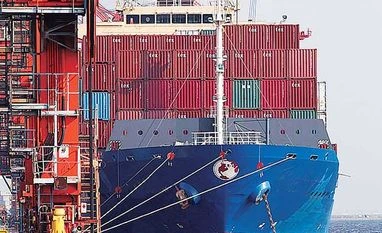 "Garment exporters for rule changes")


 Connect with us on WhatsApp