GDP back series data: CSO method theoretically better, says Pronab Sen

Whether the CSO's methodology was appropriate is a technical debate among statisticians, says the former chief statistician
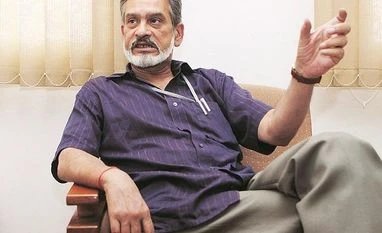
Pronab Sen
Former chief statistician Pronab Sen
Indivjal Dhasmana
Last Updated : Nov 30 2018 | 1:25 AM IST
Amid a war of words between the government and the opposition over the back series GDP data, former chief statistician Pronab Sen tells Indivjal Dhasmana drastic cuts in both GDP at constant prices and current prices in the new data raise doubts, but he prefers the methodology used by the Central Statistics Office (CSO) to an across-the-board single methodology used by a committee appointed by the National Statistical Commission (NSC). Edited excerpts:

A sharp divergence between the calculations of the NSC-appointed committee and the CSO is giving rise to doubts over the numbers. What is your take?

The committee report was a fairly straightforward exercise, which was trying to bridge the discrepancies between the 2004-05 and the 2011-12 statistics. In 2011-12, you had an estimation based on the old series and then when you did the base revision, you re-calculated 2011-12 ab initio and arrived at different numbers. Those numbers will tell you that GDP at current prices was lower than what was estimated on the 2004-05 basis by about two percentage points. But GDP at const­ant prices was higher. This has to be resolved when you do the back casting. One would have expected that GDP at current prices would have to be brought down, and GDP at constant prices had to be brought up. What we are seeing is that GDP at constant prices has also been brought down. 

The committee used the production shift methodology. Was the methodology used by the CSO better than the committee's?

The CSO has taken other indicators and projected past growth in each sector. This is theoretically a better way than the simple arithmetic extrapolation used by the committee. The committee used the same method for every sector, while the CSO used different indicators for different sectors. Whether the CSO's methodology was appropriate is a technical debate among statisticians. On the face of it, I prefer each sector using different methodologies. What the CSO has done is better. The problem arises when you see such large changes when differences are small. This is giving rise to questions. 

Has the annual survey of industry (ASI) made any difference?

In the old series, the ASI was used. When we changed the methodology to the MCA 21 data base, what we found that in the case of manufacturing, the ASI was seriously underestimating growth. When this data was coming out, I was expecting manufacturing growth would be pushed up. On the other hand, for some of the services, particularly trade, growth rates have to be revised downwards because they were hugely over-stated in the old methodology. But I found that both were rather pulled down. I don't understand how that has happened. 

Do you think that the NITI Aayog's involvement in back-series data has given rise to doubts over the numbers?

The problem has cropped up because of that. Had the CSO released the data, there would have been much less questioning. The CSO is a professional statistical organ­isation. But because the NITI Aayog got involved, there are questions whether the data is politically motivated. This dam­ages the credibility of the CSO seriously. This should not have happened. The NITI Aayog is a political organisation and so was the erstwhile Planning Commission. 

But journalists used to go to the Planning Commission to get copies of GDP data at the time of release...

Never. The CSO used to release the numbers and then journalists used to come to the Planning Commission for explanations on the GDP numbers. Only three people used to see the data before the release. Those were the prime min­ister, the finance minister and the deputy chairman of the Planning Commission. Even these three people used to get the data only two hours before the press release. What happened on Wednesday gave the impression that the NITI Aayog was involved from the beginning. That is a very damaging impression.

One subscription. Two world-class reads.

Already subscribed? Log in

Subscribe to read the full story →
*Subscribe to Business Standard digital and get complimentary access to The New York Times

Smart Quarterly

₹900

3 Months

₹300/Month

SAVE 25%

Smart Essential

₹2,700

1 Year

₹225/Month

SAVE 46%
*Complimentary New York Times access for the 2nd year will be given after 12 months

Super Saver

₹3,900

2 Years

₹162/Month

Subscribe

Renews automatically, cancel anytime

Here’s what’s included in our digital subscription plans

Exclusive premium stories online

  • Over 30 premium stories daily, handpicked by our editors

Complimentary Access to The New York Times

  • News, Games, Cooking, Audio, Wirecutter & The Athletic

Business Standard Epaper

  • Digital replica of our daily newspaper — with options to read, save, and share

Curated Newsletters

  • Insights on markets, finance, politics, tech, and more delivered to your inbox

Market Analysis & Investment Insights

  • In-depth market analysis & insights with access to The Smart Investor

Archives

  • Repository of articles and publications dating back to 1997

Ad-free Reading

  • Uninterrupted reading experience with no advertisements

Seamless Access Across All Devices

  • Access Business Standard across devices — mobile, tablet, or PC, via web or app

Next Story



