The government’s proposed gold policy, being finalised after recommendations from a NITI Aayog panel, should lead to a big rise in India’s sourcing of refined gold from local refineries.
Data compiled by the global gold miners’ body, World Gold Council, showed India’s total dore (unrefined gold) import was 245.7 tonnes for calendar year 2017, compared to 141.9 tonnes the previous year. Recovery through melting of used jewellery was 88.4 tonnes from local refineries in calendar 2017, compared to 79.5 tonnes in 2016. Another 8.8 tonnes of gold was sourced from other sources, against 9.9 tonnes in 2016. If total import is taken as net of exports, then domestic supply is estimated over 40 per cent.
Experts gathered at 5th India International Summit organised by the India Bullion and Jewellers Association said they expected the policy to pave the way for big changes in the entire jewellery value chain.
“The new policy is likely to boost local refineries immensely. Gold supply through local refineries might increase to 80 per cent in the next few years, from over 40 per cent now,” said Rajesh Khosla, former managing director of MMTC Pamp, the country’s only refinery to produce LBMA (London Bullion Markets Association)-approved gold in India.
Industry stakeholders say gold is being regulated by a number of ministries and other bodies. The commerce ministry makes policy on jewellery export, while the finance ministry and Reserve Bank set mechanisms to address the issue of the current account deficit if gold import rises.
“It is important to have a single regulator for the entire trade, to avoid inter-ministerial movement of papers seeking approval for various issues dealt by the gold and jewellery industry. Gold is currently regulated by many regulators, with different objectives. A single regulator is needed to address all concerns of the entire industry and formulate regulations, keeping in mind all the interested stakeholders,” said Sabyasachi Ray, executive director, Gems and Jewellery Export Promotion Council.
To address this issue, said Manoj Dwivedi, joint secretary, Union ministry of finance, a Gold Board is being formed; the announcement had actually bene made by the finance minister in this year's Union Budget presentation. It might have statutory powers, say sources, with representation from all stakeholders in gold and the respective government departments and regulators. Dwivedi did not say when this would be set up.
“We have started working on the board, as announced by the minister. It is important that all industry stakeholders come together under one roof and the government is listening to all of them,” Dwivedi said.
The proposed policy is to address the issues of transparency in gold and jewellery retailing, hallmarking and financing against gold, among others.
Read this article for free
Register to continue reading premium journalism and analysis from Business Standard.

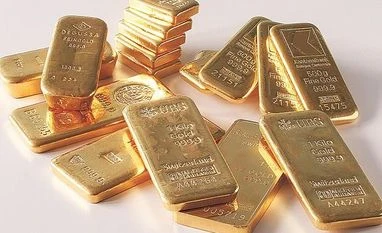 "Gold policy likely to boost supply by Indian refineries")












 Connect with us on WhatsApp