Government considering tax benefits for scrapping 15-year old vehicles

The policy, likely to be called the Voluntary Vehicle Fleet Modernisation Programme, is expected to push 28 million vehicles off the roads
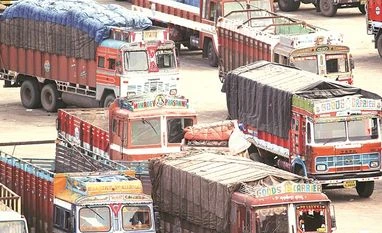
Trucks
Logistics providers say the new tax regime not only saves tax and time, it also reduces logistics costs
Megha ManchandaJyoti Mukul
Last Updated : Feb 08 2018 | 5:51 AM IST
The government is finalising a policy to scrap commercial vehicles that are more than 15 years old, and is proposing tax incentives from both the Centre and the states. This proposal, however, requires the approval of the Goods and Services Tax (GST) Council.

The policy, likely to be called the Voluntary Vehicle Fleet Modernisation Programme, is expected to push 28 million vehicles off the roads.

For this, a three-layer incentive system is being worked out. Old vehicles will have a scrap value that will accrue to the owner. The Union and state governments will also give incentives, including a tax benefit.

“When you go to buy a new vehicle with the certificate (for your old vehicle being scrapped), the car seller will give a rebate,” said Roads Minister Nitin Gadkari. 

He added, “To give this rebate as a component of the GST, the finance minister (Arun Jaitley) will have to approach the GST Council.”

Gadkari said the scrapping policy, to be finalised soon, would help in recycling and bringing down the cost of components. “If 15-year-old commercial vehicles are scrapped, industry will grow at 22 per cent and pollution will be reduced,” he said. 

About 65 per cent pollution is caused by heavy vehicles that are 15 years old or older.

In September last year, the National Green Tribunal (NGT) ordered all diesel vehicles more than a decade old off the roads of Delhi and the National Capital Region (Delhi-NCR).

The Union Ministry of Heavy Industries and Public Enterprises had appealed against the order but the tribunal rejected it. Referring to a report published by the Central Pollution Control Board, the NGT had said the use of diesel in vehicles was highly toxic. The Supreme Court had also rejected similar appeals challenging the ban. 

All commercial vehicles are likely to be covered by the Centre’s policy, but the Delhi government is also planning on a policy of its own to scrap old cars that are routinely abandoned on the streets.

Old vehicles plying on the roads do not comply with the new BS IV (Euro IV) emission norms, implemented from April 1, 2017, across the country. Both fuel and automobiles have to be compliant in order to cut emissions. From April 2020, the industry is required to leapfrog to BS VI (Euro VI) norms.

One subscription. Two world-class reads.

Already subscribed? Log in

Subscribe to read the full story →
*Subscribe to Business Standard digital and get complimentary access to The New York Times

Smart Quarterly

₹900

3 Months

₹300/Month

SAVE 25%

Smart Essential

₹2,700

1 Year

₹225/Month

SAVE 46%
*Complimentary New York Times access for the 2nd year will be given after 12 months

Super Saver

₹3,900

2 Years

₹162/Month

Subscribe

Renews automatically, cancel anytime

Here’s what’s included in our digital subscription plans

Exclusive premium stories online

  • Over 30 premium stories daily, handpicked by our editors

Complimentary Access to The New York Times

  • News, Games, Cooking, Audio, Wirecutter & The Athletic

Business Standard Epaper

  • Digital replica of our daily newspaper — with options to read, save, and share

Curated Newsletters

  • Insights on markets, finance, politics, tech, and more delivered to your inbox

Market Analysis & Investment Insights

  • In-depth market analysis & insights with access to The Smart Investor

Archives

  • Repository of articles and publications dating back to 1997

Ad-free Reading

  • Uninterrupted reading experience with no advertisements

Seamless Access Across All Devices

  • Access Business Standard across devices — mobile, tablet, or PC, via web or app

Next Story


