Govt firming up policy to make aviation fuel from non-edible seeds: Gadkari

"The petroleum ministry is firming up a policy to make aviation fuel from non-edible oil seeds so that we are able to reduce imports of ATF," Gadkari said
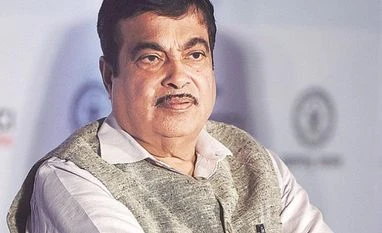
Nitin Gadkari
Nitin Gadkari. Photo: PTI
Shally Seth Mohile
Last Updated : Sep 05 2018 | 10:11 PM IST
In a bid to trim down the oil import bill and reduce pollution, the government is in the process of firming up a policy to make aviation fuel from non-edible seeds, said Nitin Gadkari, Minister of Road Transport and Highways,  on Wednesday.  India imports aviation turbine fuel worth of Rs 300 billion every year,  Gadkari told delegates at the 58th Annual Convention of Automotive Component Manufacturers (ACMA).
"The petroleum ministry is firming up a policy to make aviation fuel from non-edible oil seeds so that we are able to reduce imports of ATF," he said. 

The move is a part of the big push the government is giving to reduce the import of crude.

Last week, the Petroleum Ministry did a pilot on a Spice Jet flight by blending oil extracted from non-edible seeds from Jatropha for a short distance flight from Delhi to Dehradun. The flight flew on 25% bio-fuel and 75% ATF. The fuel was developed by the Indian Institute of Petroleum (IIP) in Dehradun.

The minister said that the country had non-edible seeds that could be used for extracting oil in large quantities.

The Petroleum Ministry is also considering the production of first-generation ethanol. "We are surplus in sugar and some countries are asking us to sell it to them at Rs 10 to 11 per kg. We are surplus by 5 to 6 million tonnes.  It's going to go up next year and it would pose a challenge in terms of what to do with it", he said.

The government has approved a policy to push molasses production to 6 per cent from 4 per cent, currently.  Plans are afoot to convert sugar to molasses. This will bump up the production of ethanol and enable competitive pricing, he added. 

"The idea is to make ethanol from sugarcane and not sugar. The parity will be such that producers will be incentivised to make ethanol," he said.

Meanwhile, the Petroleum Ministry has also approved plans of setting up of five bio-ethanol plants that will derive ethanol from rice, wheat, cotton straws and bamboo. "We are also planning to change crop pattern and push the production of corn for 
bio-ethanol till we have surplus production of wheat and rice," said Gadkari.

One subscription. Two world-class reads.

Already subscribed? Log in

Subscribe to read the full story →
*Subscribe to Business Standard digital and get complimentary access to The New York Times

Smart Quarterly

₹900

3 Months

₹300/Month

SAVE 25%

Smart Essential

₹2,700

1 Year

₹225/Month

SAVE 46%
*Complimentary New York Times access for the 2nd year will be given after 12 months

Super Saver

₹3,900

2 Years

₹162/Month

Subscribe

Renews automatically, cancel anytime

Here’s what’s included in our digital subscription plans

Exclusive premium stories online

  • Over 30 premium stories daily, handpicked by our editors

Complimentary Access to The New York Times

  • News, Games, Cooking, Audio, Wirecutter & The Athletic

Business Standard Epaper

  • Digital replica of our daily newspaper — with options to read, save, and share

Curated Newsletters

  • Insights on markets, finance, politics, tech, and more delivered to your inbox

Market Analysis & Investment Insights

  • In-depth market analysis & insights with access to The Smart Investor

Archives

  • Repository of articles and publications dating back to 1997

Ad-free Reading

  • Uninterrupted reading experience with no advertisements

Seamless Access Across All Devices

  • Access Business Standard across devices — mobile, tablet, or PC, via web or app

Next Story



