The government is looking to spend around Rs 120-150 billion to support states on their various models of procurement of agriculture commodities under Minimum Support Price (MSP) that includes Madhya Pradesh’s Bhawaantar Bhugtan Yojana (BBY), its own Market Assurance Scheme (MAS), the Telangana model of income support or any other in the next six to eight months, a senior agriculture ministry official said.
“Still, a lot of these issues are under the realm of discussion but we would ideally like to participate in some form or the other and might give freedom to states to choose their own strategy to procure agriculture commodities to support farmers,” the official said.
He said the financial support would only be limited to farm products for which government announces a Minimum Support Price (MSP) and not horticulture crops which don’t have any MSP.
He said though the Budget 2018 hasn’t specifically allocated any amount for the same but resources can be arranged through supplementary demand for grants in 2018-19.
Finance Minister Arun Jaitley in his 2018-19 Budget speech had authorized the NITI Aayog to work an ideal procurement mechanism with states to ensure that the benefit of Minimum Support Price (MSP) reach the maximum number of farmers.
He told the Parliament that MSPs henceforth would necessarily by 50 per cent more than cost of production, which he later clarified as would be A2+FL cost and does not include imputed cost of labour.
Though the representatives of agriculture ministry would hold discussions with NITI Aayog and others in the next few weeks to deliberate upon an ideal procurement mechanism for states, but sources said the common thinking within the government is that let states determine their own procurement mechanism and Centre will financially participate in that in a mutually agreed ratio.
“For most schemes, the Centre and states share the financial burden in the ratio of 60:40, but in this case we might agree on 50:50 or something else but it to me it won’t be more than existing ratio of Central-state sharing,” the official explained.
At present, the Centre runs two schemes, the Market Intervention Scheme (MIS) and Price Support Price (PSS) to support states to intervene in the market in the event of a price fall of farm commodities.
The consumer affairs ministry also operates a Price Stabilisation Fund (PSF) to intervene in the market in the event of price fall or rise in the interest of consumers.
The various models of procurement would also come up for discussion during a two-day meeting called by the government and NITI with academicians, states and others from Monday.
Issues related to MSP and price volatility would also be discussed in the meeting which will be attended by Prime Minister Narendra Modi.

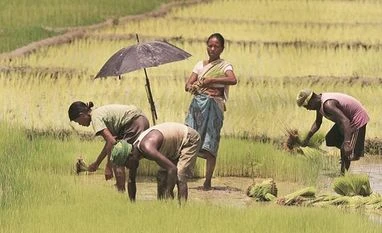 "Govt may spend Rs 120-150 bn to support states on procurement of farm goods")












