LIC policyholders, who have had a hand in creating this institution, will get an opportunity to own a part of the PSU, DIPAM secretary Tuhin Kanta Pandey told Nikunj Ohri. In an interview, Pandey said up to 10 per cent of the issue size of LIC’s IPO will be reserved for policyholders. Edited excerpts:
With the new privatisation policy, what will be government’s presence in strategic sectors?
Strategic sectors have been divided into four buckets. The first is based on national security, atomic energy space and defence. The second is critical infrastructure, transport and tele communication; third being energy and minerals, power, petroleum, oil, coal and minerals. And, the last is banks, insurance companies and financial services. NITI Aayog will identify companies for divestment and the proposal would be taken up by the core group of secretaries on divestment. A final call will be taken by the group of ministers. PSUs in the non-strategic sectors will not have to go through this process. The finance minister has already announced that two banks will be privatised. But this does not mean that the remaining 10 PSBs (public sector banks) will remain with the government.
Will DIPAM be revamped with the new privatisation policy?
We will certainly like to add more capacity at DIPAM. Post 1991, this is yet another big reform. More capacity is needed to manage these transactions. We will be deliberating on how we are going to ramp up. This has not yet been finalised. But more capacity is certainly needed.
How will the policy of closure of PSUs be effective?
Currently, there is no policy on shutting down PSUs. Currently, the Department of Public Enterprises has guidelines laid out that need to be followed once a decision is taken to shut a PSU. The new policy enables the government to take closure decisions. This will help in closing down PSUs fast, and not delay it for years because a company’s assets cannot be sold. The new SPV (special purpose vehicle) will also come handy here.
What changes have been proposed in the Budget for moving ahead with LIC IPO?
Provisions have been added in the LIC Act to provide some reservation to policyholders as shareholders. Up to 10 per cent of shares of the issue size will be reserved for policyholders.
Why has the divestment target been set lower even when most sales have been deferred to next year?
In divestment, we have been sometimes following not a bottom-up approach really, but a residual cap approach, because we are setting targets for managing the fiscal. Government equity in many PSUs has fallen to 51 per cent. Unless we do strategic divestment, not much can be done. The potential for minority stake sales, a very popular option, has now sunk.
Government shareholding in most oil PSUs has hit 51 per cent.
Unless we are doing strategic sale, there is no point in reducing government equity below 51 per cent. Although we can reduce stake below 51 per cent in PSUs on a case-to-case basis, we have a Cabinet approval for that. However, we have to take into consideration whether it’s worth it. We currently don’t think of reducing government equity below 51 per cent as there is no value for it.
The oil sector has passed through turmoil. Not much of strategic sales are going to materialise this year. We have avoided PSU to PSU sale, showing our seriousness towards structural reforms.

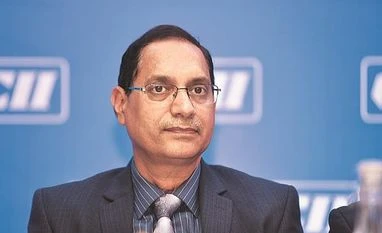 "Govt will reserve up to 10% in LIC's IPO for policyholders: DIPAM Secretary")











