GST appellate body clears air on tax credit for sweet shop vs restaurant

Sweet shop not to be regarded as extension of dine-out eatery, and will enjoy tax credit benefit, if its accounts are maintained separately
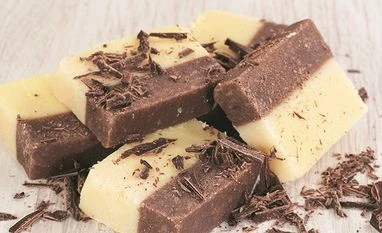
GST impact on sweets
Indivjal Dhasmana New Delhi
2 min read Last Updated : Mar 15 2019 | 1:58 PM IST
An owner of a restaurant and sweet shop who runs both set-ups from the same premises will be eligible for input tax credit (ITC) for his sweet shop under the GST regime, as long as the accounts of the two businesses are maintained separately, at least in Uttarakand. 

The appellate authority for advance ruling (AAAR) of the state set aside AAR ruling in this matter. 

Explaining the case, Harpreet Singh, Partner, Indirect tax, KPMG, said AAR had ruled that the sweet shop will be regarded as extension of restaurant. As such, GST at the rate of five per cent would be imposed on on the condition that input tax charged on goods and services used has not been set off. This would be applicable to all items, including takeaways, sold from the sweet shop.

Restaurants draw five per cent GST, but ITC is not given.

The shop owner appealed to AAAR against the order, contending that items sold from the sweet shop and restaurant cannot be taken as composite supply. 

AAAR set aside AAR order. It ruled that items sold from the sweet shop would draw applicable GST rates and ITC would be given. On the other hand, items sold at the restaurant would draw five per cent GST without ITC.

This, however, is subject to the provision that the owner of the two businesses maintains separate records for each with respect to input and output and billings, along with other accounting records, AAAR ruled.

The ruling may have repercussions for many other different scenarios, such as an outlet selling eatables in a mall. 

Singh said there is a thin line of difference between restaurants and food takeaway joints, kiosks or tuck shops and hence there is ambiguity surrounding classification under GST. The classification becomes blurred as supplying snacks such as chat, dhokla and lassi from shops or kiosks also involves some amount of service, he said.  

"This ruling is likely to provide much needed clarity on the classification principle to be adopted in all such cases," he said.

One subscription. Two world-class reads.

Already subscribed? Log in

Subscribe to read the full story →
*Subscribe to Business Standard digital and get complimentary access to The New York Times

Smart Quarterly

₹900

3 Months

₹300/Month

SAVE 25%

Smart Essential

₹2,700

1 Year

₹225/Month

SAVE 46%
*Complimentary New York Times access for the 2nd year will be given after 12 months

Super Saver

₹3,900

2 Years

₹162/Month

Subscribe

Renews automatically, cancel anytime

Here’s what’s included in our digital subscription plans

Exclusive premium stories online

  • Over 30 premium stories daily, handpicked by our editors

Complimentary Access to The New York Times

  • News, Games, Cooking, Audio, Wirecutter & The Athletic

Business Standard Epaper

  • Digital replica of our daily newspaper — with options to read, save, and share

Curated Newsletters

  • Insights on markets, finance, politics, tech, and more delivered to your inbox

Market Analysis & Investment Insights

  • In-depth market analysis & insights with access to The Smart Investor

Archives

  • Repository of articles and publications dating back to 1997

Ad-free Reading

  • Uninterrupted reading experience with no advertisements

Seamless Access Across All Devices

  • Access Business Standard across devices — mobile, tablet, or PC, via web or app

Next Story



